
By: Dr. Max MacCloud [DO, ND, PhD]
If you’ve spent any time in the longevity space over the last few years, you’ve undoubtedly heard the phrase “zombie cells.” It sounds like a low-budget sci-fi movie pitch directed by someone who drank too much kombucha, but it’s actually one of the most compelling frontiers in cellular biology and age reversal.
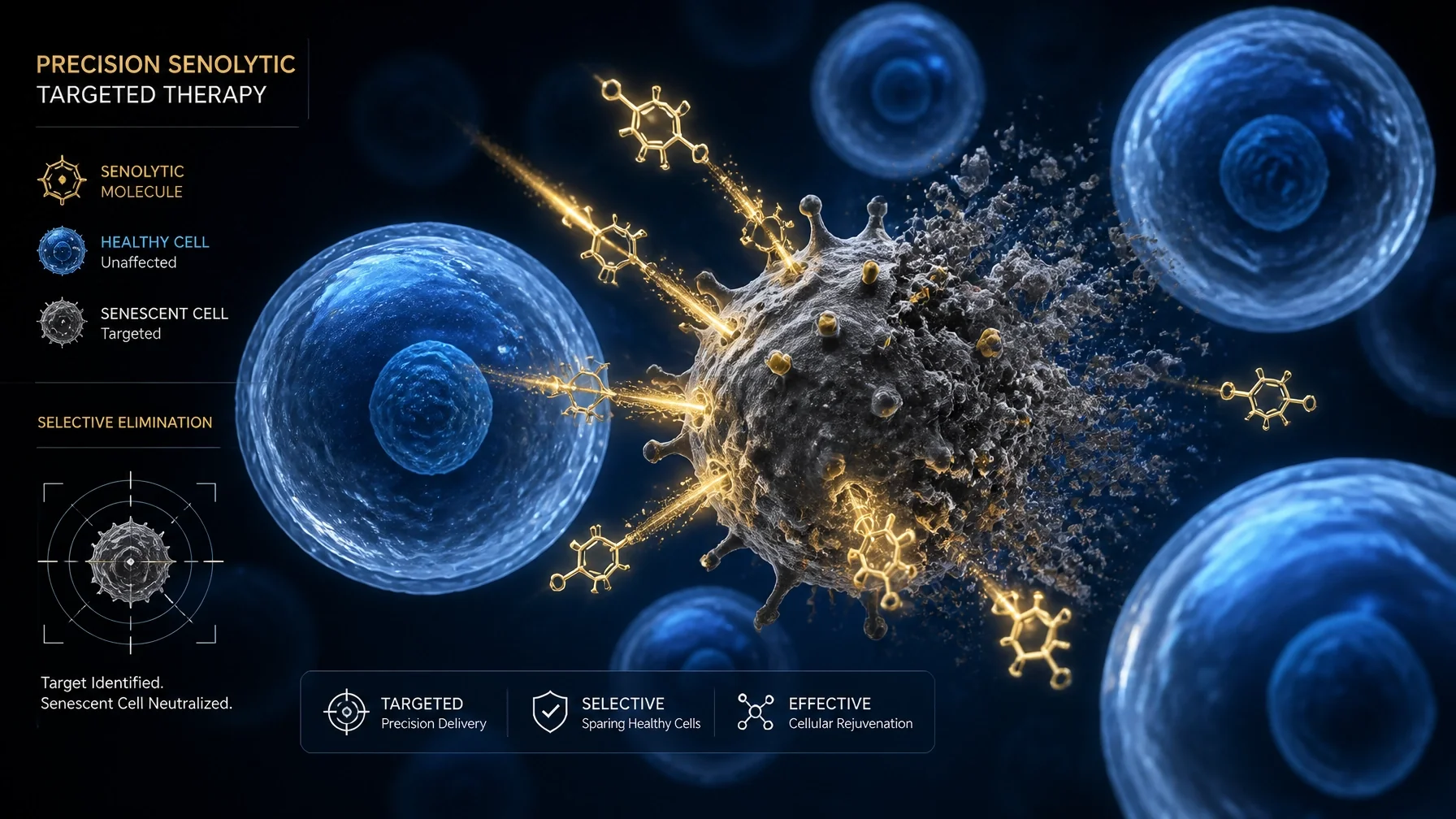
Affectionately (and accurately) known as senescent cells, these are damaged, dysfunctional cells that flat-out refuse to undergo programmed cell death, a tidy little biological process we call apoptosis. Instead of gracefully exiting the building when their DNA gets shredded or their telomeres throw in the towel, they linger in your organs like cellular squatters. They refuse to divide, they refuse to die, and worst of all? They spew a toxic cocktail of inflammatory cytokines, chemokines, and tissue-degrading enzymes known as the Senescence-Associated Secretory Phenotype, or SASP.
Charming, right?
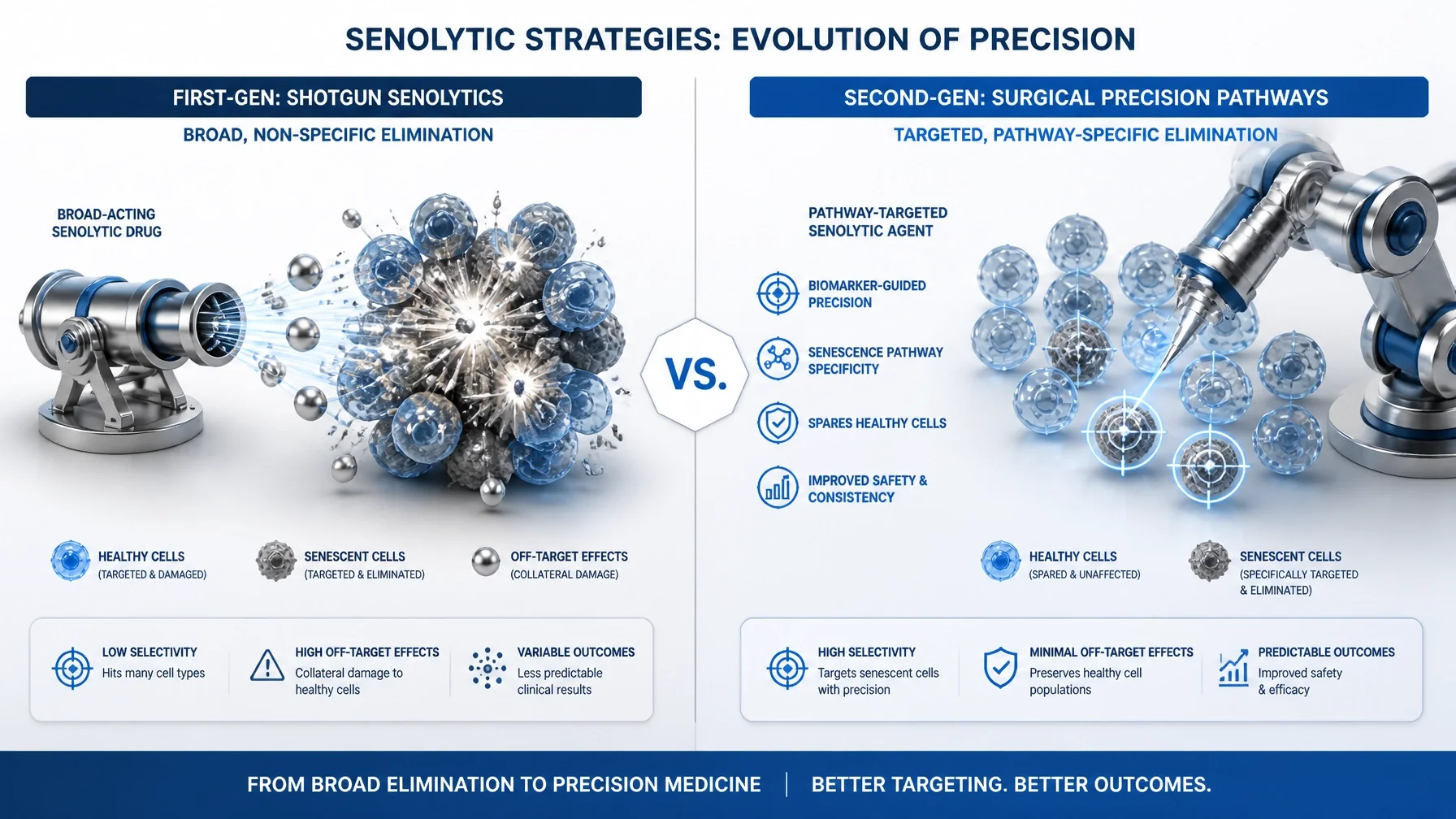
For a long time, the mainstream medical establishment ignored this entirely, preferring to hand out pills for your symptoms while your biological clock ticked away like a time bomb. And when the early longevity pioneers finally woke up to the zombie cell problem, their solution was about as subtle as a brick through a stained-glass window: hit the body with broad-spectrum, shotgun senolytic compounds and hope for the best.
Spoiler alert: Carpet-bombing your biology comes with collateral damage.
Welcome to Senolytics 2.0: Precision Senolytics. The paradigm has officially shifted. We are moving away from bludgeoning your entire system and toward surgical, targeted removal. Here is how modern regenerative medicine clears zombie cells safely, efficiently, and without wrecking your health in the process.
The Dark Side of the “Zombie Cell” (And Why We Actually Need Them)
Before we start handing out molecular Molotov cocktails to every senescent cell in your body, let’s pause and show a little respect for why senescence exists in the first place. Biology doesn’t do things just to annoy you (well, most of the time).
Cellular senescence is an evolutionary defense mechanism. When a cell suffers severe DNA damage, telomere erosion, or acute metabolic stress, it hits a permanent emergency brake on its cell cycle. Why? To prevent itself from turning cancerous. A senescent cell stops dividing, thereby blocking a mutated tumor from multiplying out of control.
In acute situations: like a skin cut, a muscle tear, or a bone fracture: short-term senescent cells are absolute rock stars. They emit distress signals that summon the immune system, stimulate initial tissue repair, and then: if everything works the way Mother Nature intended: they gracefully vanish.
The problem arises as we age. Chronological time marches on, our immune systems get lazy and inefficient, and our macrophage clearance crews start sleeping on the job. Chronic accumulation sets in.
Here is how the tragedy unfolds:
- Acute Senescence (Good): DNA Damage / Stress > Cell Arrest > Tissue Repair > Immune Clearance > Restoration.
- Chronic Senescence (Bad): Persistent Damage > SASP Secretion > Systemic Inflammaging > Bystander Senescence (Spreading the Zombie Plague).
When senescent cells stick around, the SASP acts like a cellular megaphone. It broadcasts chronic, low-grade inflammation to neighboring healthy cells, essentially bullying them into becoming zombies too. This driver of “inflammaging” accelerates arterial stiffness, degrades the extracellular matrix, exhausts your precious stem cell pools, and makes you look and feel older than your driver’s license suggests.
If you want to dive deeper into how cellular decline and metabolic stagnation intersect, take a look at our insights on peptide therapy in Sarasota and how we tackle foundational aging at ARTC.health. The delivery side of the same problem: the microvascular network that actually carries oxygen to the tissue you are trying to rescue: is covered in our breakdown of EWOT oxygen therapy and the microvascular reset.
First-Gen vs. Second-Gen Senolytics: The End of the “Shotgun” Approach
The early days of senolytics relied on blunt-force combinations like Dasatinib + Quercetin (D+Q). Let’s give credit where credit is due: D+Q proved in human clinical trials that clearing senescent cells was actually possible. It wasn’t just theoretical biohacker fiction.
However, Dasatinib is a powerful tyrosine kinase inhibitor with a rap sheet of off-target side effects that would make a pharmacologist sweat. Taking broad-spectrum kinase inhibitors daily or in unmonitored cycles is a fantastic way to wipe out beneficial senescent cells needed for acute wound healing, trigger systemic inflammation, and wreck healthy tissues.
That’s like using a tactical nuclear strike to get rid of a mouse in your kitchen. Sure, the mouse is gone, but so is your refrigerator, your countertops, and your kitchen sink.
Precision Senolytics 2.0 changes the game entirely. Instead of carpet-bombing, we use highly selective compounds, targeted peptides, and novel delivery systems to exploit the specific “pro-survival” pathways that zombie cells rely on to evade death. We target their Achilles’ heel without collateral damage.
The Precision Senolytics Arsenal: High-Value Targeted Protocols
To understand how we execute precision clearance today, let’s look at the heavy hitters in our clinical protocol toolkit.
1. High-Dose Pulsed Fisetin (The Flavonoid Sniper)
Fisetin is a naturally occurring plant polyphenol found in strawberries and apples, but before you rush to the grocery store to eat your weight in fruit, let me stop you right there. Eating a cart full of strawberries will not give you the clinical concentrations required here. Calling high-dose fisetin a “strawberry extract” is like calling a Ferrari a “red bicycle.”
Of ten flavonoids screened head to head, fisetin came out the most potent senolytic of the group. At high concentrations, fisetin acts as a selective inhibitor of the BCL-2 protein family: the primary anti-apoptotic molecular shield that zombie cells use to keep themselves alive while normal cells sail smoothly past.
- The Mechanism: Fisetin neutralizes the BCL-2 protective barrier, allowing the senescent cell’s internal suicide machinery (caspases) to trigger naturally, while leaving healthy, rapidly proliferating cells completely untouched.
- The Protocol: Rather than taking low daily doses (which act merely as a mild antioxidant), clinical senolytics protocols utilize high-dose pulsed administration: typically around 20 mg per kg of body weight per day for 2 to 3 consecutive days, repeated intermittently once a month or once a quarter.
2. FOXO4-DRI Peptide (The Molecular Wedge)
When we talk about advanced regenerative medicine and true age reversal, the FOXO4-DRI peptide represents one of the most sophisticated precision tools in existence.
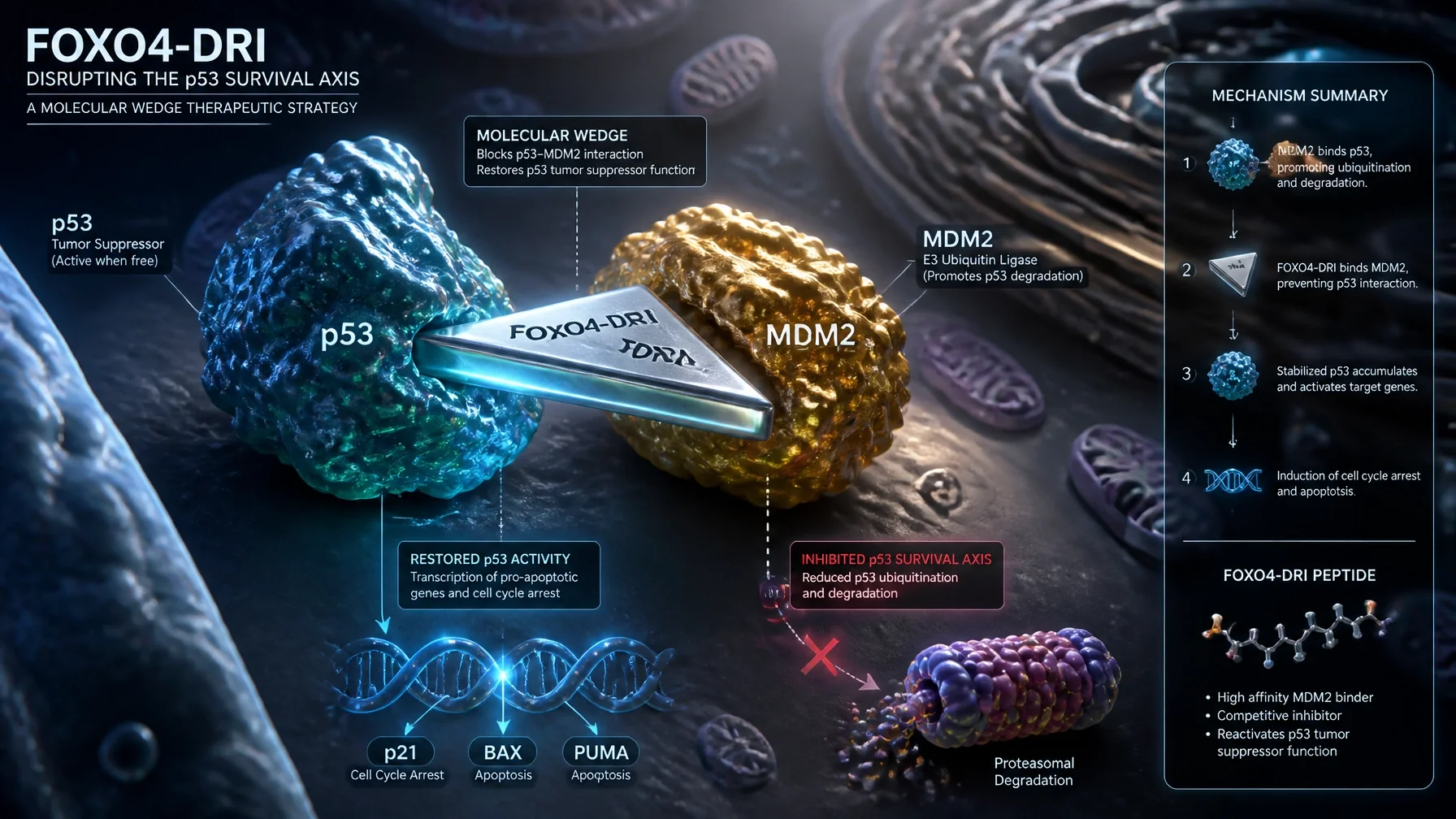
Senescent cells love to cheat death by using the transcription factor FOXO4 to bind tightly to p53 (the famous tumor suppressor protein). This nefarious handshake traps p53 inside the nucleus, preventing it from executing programmed cell death.
- The Mechanism: FOXO4-DRI is a custom-engineered retro-inverso peptide that acts as a microscopic decoy wedge. It disrupts the FOXO4-p53 interaction, freeing p53 to induce targeted apoptosis specifically in senescent cells.
- Clinical Precision: Healthy, functioning cells do not hyper-express FOXO4 in this manner. That means FOXO4-DRI leaves your normal, vital cells completely unharmed while executing the walking dead.
For patients exploring advanced regenerative protocols, pairing targeted peptide strategies with physical performance protocols: like those integrated with our advanced ARX computerized resistance training: creates a synergistic environment where cellular cleanup meets structural muscle preservation.
Senolytics vs. Senomorphics: The Two-Step Approach
Not every zombie cell in your body needs to be executed on sight. Sometimes, shutting them up is a much smarter tactical move than wiping them out entirely. This brings us to the critical distinction between senolytics and senomorphics.
- Senolytics (The Destroyers): Compounds like high-dose Fisetin, FOXO4-DRI, or targeted molecular inhibitors that directly trigger apoptosis and clear senescent cells from tissues.
- Senomorphics (The Mutes): Compounds like Rapamycin, Apigenin, Metformin, or specific botanical extracts that don’t necessarily kill the cell, but aggressively suppress NF-κB and mTOR signaling pathways. They turn off the toxic SASP megaphone and halt systemic inflammation in its tracks.
A brilliant precision strategy used in advanced clinical practice involves using senomorphics continuously or semi-regularly to keep inflammatory output muted, paired with pulsed senolytics every few months to sweep the cellular floor.
If you are already navigating weight management and metabolic health: perhaps exploring options like Retatrutide in Sarasota or reviewing our deep dive on best weight loss peptides: understanding how inflammation and cellular senescence sabotage your metabolic rate is a non-negotiable part of the journey.
The Golden Rule of Senolytics: The “Hit-and-Run” Protocol
If there is one absolute, non-negotiable takeaway from this entire discussion, etched in stone for all eternity, it is this:
Never take senolytics continuously on a daily basis.
I see self-proclaimed biohackers online popping senolytic supplements every single morning with their coffee like they’re taking a Flintstones vitamin. This is sheer madness.
- The Clinical Logic: Zombie cells take weeks or months to accumulate. You do not need to hunt them down every day. Furthermore, daily suppression of cellular senescence mechanisms will impair your body’s ability to heal wounds, disrupt normal skin regeneration, and induce unwanted immune dysfunction.
- The Cadence: Effective precision senolytic programs follow a strict “Hit-and-Run” protocol.
- Pulse Phase (1–3 Days): Introduce high-dose precision senolytics to lower the apoptotic threshold and clear accumulated senescent cell burden.
- Clearance & Recovery Phase (30–90 Days): Stand down. Allow your immune system (macrophages) to clean up the cellular debris, while tissue stem cells activate to replace old, defunct cells with fresh, high-performing biological units.
Measuring Progress: How to Know It’s Working
We don’t guess in modern clinical medicine. We measure. If you are investing time, money, and biological capital into clearing zombie cells, you need hard data proving your biological age is actually moving backward.
Here are the key clinical biomarkers we track before and after a pulsed cycle:
- Inflammatory Panels: Look for meaningful reductions in high-sensitivity C-reactive protein (hs-CRP), IL-6, and TNF-alpha: the primary inflammatory constituents of the SASP.
- Pro-Tip: Do not panic if you see a transient rise in liver enzymes approximately two weeks after taking potent senolytics. That is not liver damage; that is your liver working overtime to filter and process the massive influx of cleared zombie cell debris. It’s the cellular equivalent of taking out the garbage.
- Metabolic Indicators: Track improvements in fasting insulin, lipid clearance, and HOMA-IR. (In case you forgot, HOMA-IR stands for Homeostatic Model Assessment of Insulin Resistance: a calculated biomarker estimating how hard your pancreas is working to keep your blood sugar in check, serving as one of the best early warning indicators of metabolic dysfunction available).
- Epigenetic Pace of Aging: Utilize second-generation DNA methylation clocks: such as DunedinPACE: to measure whether your overall rate of biological aging has slowed down following protocol completion.
If the phrase “biological age” is doing a lot of work in that last point, start with what biological age actually is and how it differs from chronological age, including the five pillars we build every protocol around.
The Bottom Line
Cellular senescence is an unavoidable reality of living, breathing, and aging in a toxic modern world. But treating it with a blunt instrument causes unnecessary collateral damage.
By shifting away from shotgun protocols and embracing Precision Senolytics 2.0: matching targeted agents like high-dose Fisetin or FOXO4-DRI with intelligent “hit-and-run” dosing and rigorous biomarker tracking: you can effectively purge zombie cells, dial down systemic inflammaging, and clear the path for true tissue regeneration.
The house still wins in the end if you refuse to play smart. But with precision medicine on your side, you can flip the table and buy yourself additional decades of high-performance healthspan.
Ready to Optimize Your Biological Age?
If you are done guessing and want a customized, evidence-based roadmap built on precision senolytics rather than shotgun dosing, contact us at (941) 806-5511, visit ARTC.health, or email info@artc.health. Looking for the clinical-grade nutritional support I mention? Our nutrition site is mybodysymphony.com.
Your move.