
Antioxidants and Aging in Sarasota: Do Supplements Really Slow the Aging Process?
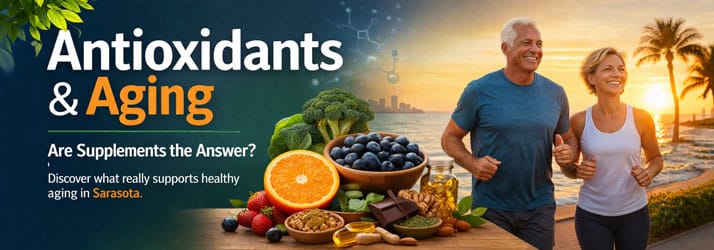
Antioxidants and aging have become a major topic in the health and wellness world, especially as more people look for ways to improve longevity, energy, and cellular health in Sarasota and the surrounding area. For years, the supplement industry has promoted the idea that free radicals are the main cause of aging and that antioxidant pills are the obvious solution. It is a persuasive message, but the science is far more nuanced than the marketing suggests.
The truth is that free radicals are not purely harmful. They are natural byproducts of metabolism and also serve important functions in cellular signaling, immune defense, and adaptation. The real issue is not the presence of free radicals themselves, but whether the body can maintain balance. When that balance is lost, oxidative stress can contribute to tissue damage, mitochondrial dysfunction, inflammation, and age-related decline.
The Real Relationship Between Antioxidants and Aging
To understand antioxidants and aging, it helps to move beyond the oversimplified idea that oxidation is always bad. Your body actually depends on small amounts of oxidative stress for normal biological function. Mitochondria generate reactive oxygen species as part of energy production, and those signals help regulate repair processes and resilience.
Problems usually begin when mitochondria become damaged, metabolic health declines, blood flow worsens, or inflammation becomes chronic. In those situations, oxidative stress can exceed the body’s ability to compensate. That is when aging can accelerate.
Why Free Radicals Are Not the Whole Story
Aging is not simply a “free radical problem.” It is a broader systems problem that may involve:
- Mitochondrial dysfunction
- Microvascular decline
- Hormone imbalance
- Chronic inflammation
- Cellular senescence
- Loss of metabolic flexibility
- Reduced recovery and repair capacity
This is one reason why many people exploring Hormone Optimization, Functional Medicine, and regenerative therapies are looking beyond supplements alone.
Do Antioxidant Supplements Really Work?
This is where the science becomes inconvenient for supplement marketing. While antioxidant-rich diets are consistently associated with better health, isolated antioxidant supplements have produced disappointing and sometimes harmful results in major studies.
Beta-Carotene
Large clinical trials found that beta-carotene supplementation increased lung cancer risk in smokers rather than reducing it.
Vitamin E
Vitamin E was once promoted as a major anti-aging nutrient, yet large studies failed to show meaningful protection against cardiovascular disease or cancer. Some findings even suggested increased risk in certain populations.
Vitamin C
Vitamin C remains popular, but high-dose supplementation has not consistently demonstrated meaningful longevity benefits in controlled trials. In some settings, very high doses may act more like a pro-oxidant than a protective antioxidant.
NAC and Exercise Adaptation
Some research suggests that heavy antioxidant supplementation may reduce the adaptive benefits of exercise and caloric restriction. That matters because exercise and fasting are two of the most evidence-supported strategies for healthier aging.
Why Whole Foods Are Better Than Pills
When people ask about antioxidants and aging, the best answer usually points back to whole foods rather than megadose supplements.
The Synergy Effect
Foods contain far more than one isolated compound. Berries, vegetables, herbs, green tea, and colorful plant foods provide polyphenols, flavonoids, fiber, minerals, and thousands of bioactive substances that work together.
Better Signaling and Absorption
Whole foods support the body’s own antioxidant systems rather than trying to replace them. This includes pathways involved in glutathione production, superoxide dismutase activity, and broader cellular repair.
For people trying to improve resilience and long-term vitality, this broader strategy often makes more sense than relying on a single nutrient in pill form. It also fits well with approaches such as Peptide Therapy, ARX Training, and comprehensive metabolic support.
What Actually Helps Slow Aging
If the goal is to improve health span, antioxidants are only one small piece of the puzzle. The bigger drivers of healthy aging usually include:
- Exercise and strength training to support mitochondria, muscle, and insulin sensitivity
- Quality sleep to improve recovery, inflammation control, and hormone balance
- Whole-food nutrition rich in colorful plants and nutrient-dense proteins
- Stress management to reduce chronic inflammatory burden
- Targeted medical guidance when deeper issues like hormone imbalance or metabolic dysfunction are present
At ARTC, many people exploring better longevity strategies also want to understand how therapies like Age Reversal Therapy and Medical Weight Loss may support a more complete plan.
The Bottom Line on Antioxidants and Aging
Antioxidants and aging are clearly connected, but that does not mean antioxidant supplements are the answer. The evidence suggests that aging is driven by a much larger web of factors including mitochondrial decline, vascular health, hormones, inflammation, and recovery capacity.
Whole foods rich in antioxidants appear beneficial, but likely because they support many protective systems at once. In contrast, isolated high-dose antioxidant supplements often fail to deliver the expected benefits and may occasionally interfere with the body’s natural adaptation processes.
If you want to support healthier aging, focus on the fundamentals: better sleep, exercise, nutrient-dense food, stress control, and a personalized strategy that addresses the real drivers of decline.
External References

OFFICE HOURS
Monday
10:00am – 5:00pm
Tuesday
10:00am – 5:00pm
Wednesday
10:00am – 5:00pm
Thursday
10:00am – 5:00pm
Friday
10:00am – 4:00pm
Saturday and Sunday
Closed

