

By: Dr. Max MacCloud [DO, ND, PhD]
If you are looking into non-surgical knee pain treatment, you may already know the standard script.
“Your MRI shows arthritis.”
“Your meniscus is torn.”
“You’re bone-on-bone.”
“Eventually, you’ll need a knee replacement.”
Perhaps. But “eventually” is not a diagnosis, and an MRI report is not a treatment plan.
I have spent more than 30 years studying and treating chronic musculoskeletal problems. I am not anti-surgery. I am anti-rushed surgery, anti-lazy diagnosis, and anti-the-replacement-is-your-only-option conversation when the patient has not received a serious biological and functional evaluation.
The best non-surgical knee pain treatment is rarely one miracle injection, one supplement, or one exercise. It is a sequence. Diagnosis first. Biology second. Targeted therapy third. Intelligent loading fourth. Then a clear decision checkpoint.
That is the framework.
“Treat the patient, not the MRI.”
This principle is not controversial. It is simply inconvenient in a healthcare system that often rewards speed, volume, and procedures. The knee is not a defective car part waiting for a mechanic with a larger wrench.
At Stem Regen / Age Reversal Technology Center in Sarasota, we use this framework as part of a customized regenerative and functional health evaluation. Our approach is ever-evolving because the foundational principles remain stable, while the application must fit the individual.
Before We Begin: What Does Non-Surgical Knee Pain Treatment Actually Mean?

The goal is not a better scan. It is walking, sleeping, and climbing stairs without negotiating.
Non-surgical knee pain treatment does not mean ignoring severe disease. It does not mean pretending cartilage always grows back because someone on the internet used the word “regeneration” in a video thumbnail.
It means addressing every reasonable opportunity to improve:
- Pain and inflammation
- Joint stability
- Muscle strength
- Gait and movement quality
- Metabolic health
- Microvascular function
- Mitochondrial energy production
- Tissue healing capacity
- Daily function and quality of life
Some patients improve enough to avoid or postpone surgery. Others improve enough to become better surgical candidates. Still others discover that their knee was not the primary source of pain in the first place.
That last category is more common than many people realize.
Step 1: Get the Right Diagnosis: Do Not Treat an MRI Report Instead of a Patient
An MRI is useful. It can show cartilage loss, meniscal changes, ligament injury, bone marrow lesions, synovitis, and other structural findings.
But an MRI is a map. It is not the territory.
Many imaging findings are common with age and may not explain the pain a person actually feels. A meniscal tear on the medial side does not automatically explain pain on the lateral side. Cartilage thinning does not automatically explain whether someone can walk, climb stairs, sleep, or play tennis.
A proper evaluation should connect three things:
- The patient’s symptoms
- The physical examination
- The imaging findings
When those three do not match, we slow down.
What the Evaluation Should Include
A meaningful knee assessment may examine:
- Where the pain occurs and whether it radiates
- Pain at rest versus pain during loading
- Swelling, warmth, or recurrent fluid
- Range of motion
- Ligament stability
- Meniscal provocation
- Patellar tracking
- Hip and ankle contribution
- Walking pattern and single-leg control
- Quadriceps and gluteal strength
- Previous injuries and surgeries
- Work, sport, and lifestyle demands
- Metabolic conditions that may impair healing
Sometimes the problem is osteoarthritis. Sometimes it is a ligament or tendon attachment injury. Sometimes it is patellofemoral overload, a hip problem, lumbar nerve irritation, bursitis, or an inflammatory arthropathy.
These conditions may produce similar complaints while requiring very different treatment.
Do not let a dramatic phrase on a radiology report make the decision for you.
If you are in Sarasota and have already been told that surgery is your only option, a second opinion built around non-surgical knee pain treatment is worth having. You can review our non-surgical joint repair and regeneration program before making an irreversible decision.
Step 2: Fix the Biological Environment: The Knee Is Not an Island
A joint does not heal in isolation from the rest of the body. This is the step most non-surgical knee pain treatment plans skip entirely.
The tissues around the knee require oxygen, nutrients, energy, signaling molecules, and adequate recovery time. If the biological environment is poor, the most sophisticated injection in the world may be asked to build a house on a swamp.
That is not a great construction strategy. Even HGTV would reject it.
At ARTC, I often evaluate four foundational areas:
- Microcirculation
- Mitochondrial function
- Metabolic balance
- Metabolic reserve, especially muscle
Microvascular Health
Microcirculation refers to blood flow through the smallest vessels: arterioles, capillaries, and venules.
These vessels deliver oxygen and nutrients and help remove metabolic waste. Tendons, ligaments, cartilage, and joint attachment sites are not equally well supplied with blood. Chronic injury, inactivity, smoking, insulin resistance, and vascular dysfunction may further reduce the quality of the repair environment.
This does not mean every knee problem is caused by “bad circulation.” It means healing capacity is influenced by the tissue environment, and that environment deserves attention. This is measurable, and our microvascular health assessment is often where we start.
Mitochondrial Function
Mitochondria are the energy-producing structures inside cells. They generate ATP, the cellular energy currency required for movement, repair, and enzymatic reactions.
When energy production is impaired, the body may struggle to manage inflammation and rebuild tissue. Mitochondrial health is affected by sleep, nutrition, exercise, blood sugar regulation, medication burden, chronic stress, and age-related changes.
The goal is not to chase a trendy “mitochondrial hack.” The goal is to improve the fundamentals:
- Adequate protein and micronutrient intake
- Better sleep consistency
- Appropriate aerobic activity
- Progressive resistance training
- Blood glucose and insulin management
- Reduced exposure to tobacco and excess alcohol
- Treatment of relevant medical conditions
Inflammation: Necessary Signal or Permanent Fire Alarm?
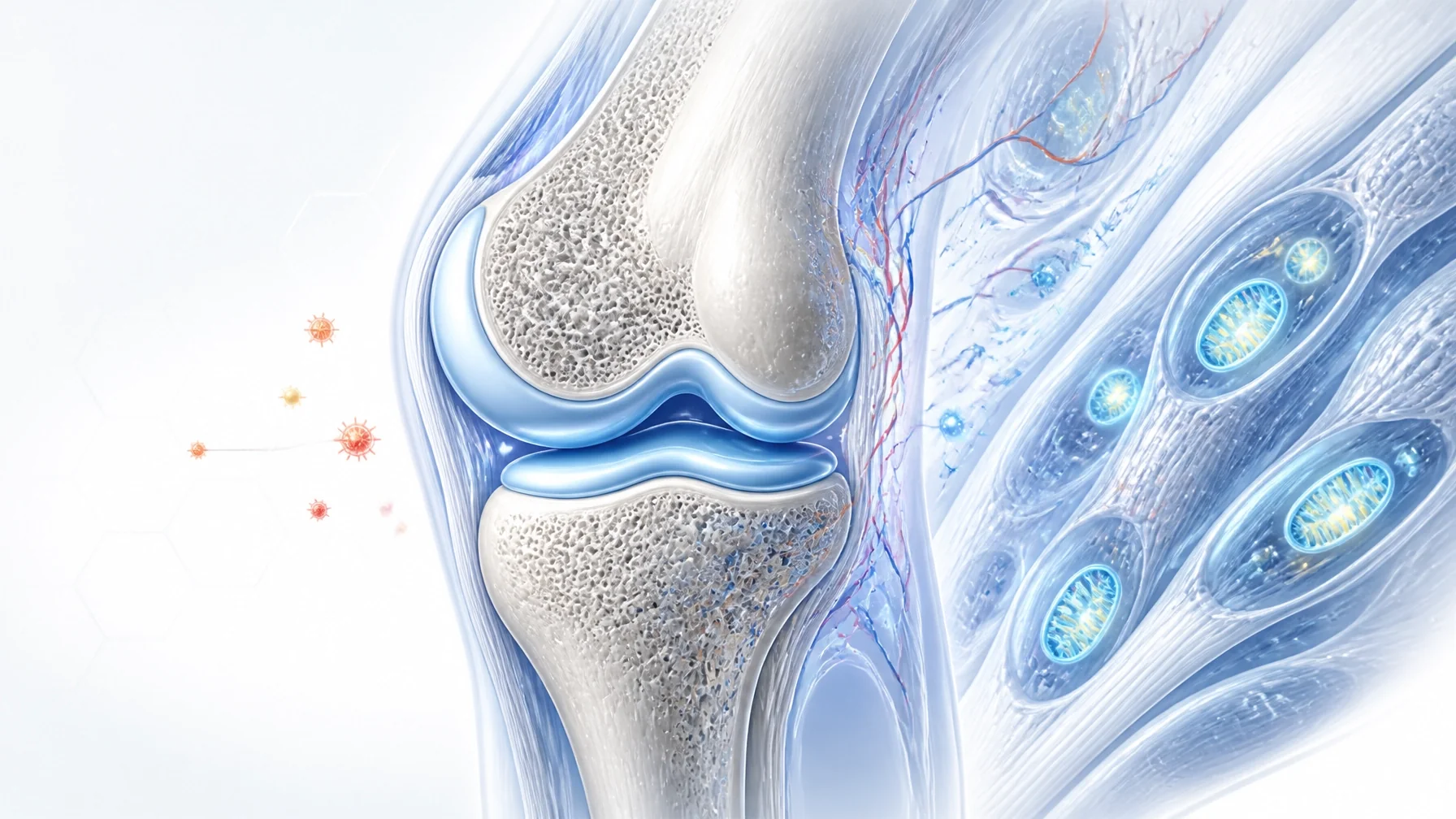
Inflammation is not automatically the enemy. The early inflammatory phase is part of normal tissue repair.
The problem is persistent, excessive, or poorly resolved inflammation. That can maintain pain sensitivity, increase catabolic activity, and interfere with the normal remodeling process.
This is why I am cautious about reflexively suppressing every inflammatory signal without understanding the context. A steroid injection may provide short-term relief, and that can be clinically useful in selected cases. But repeated injections should not be treated as harmless maintenance.
In a two-year randomized trial, repeated intra-articular triamcinolone was associated with greater cartilage volume loss than saline and did not provide better pain relief. You can read the study on PubMed.
Relief is not always repair. Those are different outcomes.
Step 3: Consider Targeted Regenerative Therapies: With Honest Evidence
Regenerative medicine is promising. It is also full of exaggerated marketing, vague terminology, and clinics that appear to believe every biologic product is a magic bullet.
It is not.
Different therapies have different evidence, mechanisms, risks, and limitations. Here is how I think about the options most often marketed as non-surgical knee pain treatment.
Platelet-Rich Plasma, or PRP
PRP is prepared from a patient’s blood and concentrated to increase the relative number of platelets and signaling proteins. These include growth factors involved in inflammation modulation, cell migration, vascular signaling, and tissue remodeling.
The evidence is encouraging for symptom relief in selected patients with knee osteoarthritis.
A recent meta-analysis of placebo-controlled trials included 18 randomized studies and nearly 2,000 patients. Across follow-up periods, PRP generally improved pain and function compared with saline, with the most noticeable benefits commonly appearing around three to six months and sometimes persisting to 12 months.
However:
- PRP preparations vary significantly.
- Platelet concentration and leukocyte content differ.
- Injection schedules vary.
- Patient selection matters.
- Long-term cartilage restoration is not proven.
- PRP is not guaranteed to prevent knee replacement.
The honest position is this: PRP may improve pain and function, but it should not be sold as guaranteed cartilage regeneration.
For additional detail, see this PRP evidence review in PMC.
Prolotherapy and Precise Placement
Prolotherapy typically uses an irritant solution, often concentrated dextrose, placed at selected ligament, tendon, or joint capsule attachment sites. The intent is to stimulate a localized healing response and address tissue laxity or chronic enthesis-related pain.
The enthesis is the area where a tendon or ligament connects to bone. These attachment sites can be clinically important, yet they are often overlooked when treatment focuses only on the joint space.
The research base for prolotherapy is more limited and less standardized than many marketing claims suggest. Some studies show improvements in pain and function, but evidence quality varies, and major guidelines do not consider it a universal first-line therapy.
At ARTC, the question is not, “Can we inject something?” The question is, “What structure is actually contributing to this patient’s symptoms, and can precise placement reasonably help?”
Peptide Therapy
Peptides are short chains of amino acids that can act as signaling molecules. Some peptides have compelling laboratory or animal data involving angiogenesis, collagen signaling, inflammation, or tissue repair.
That is not the same as having robust human clinical evidence for chronic knee osteoarthritis.
For commonly marketed compounds such as BPC-157 and TB-500, high-quality randomized human trials specifically proving durable knee cartilage repair are lacking. Many uses are investigational, and regulatory status varies by product and jurisdiction.
This is where skepticism matters.
A physician-supervised peptide protocol may be considered as part of a broader biological strategy in an appropriate patient. But peptide therapy should not be represented as a replacement for diagnosis, exercise, metabolic optimization, or evidence-based orthopedic care.
You can learn more about our physician-supervised peptide therapy programs in Sarasota, including the limitations and monitoring requirements that should accompany any responsible protocol.
Stem-Cell-Adjacent and Cell-Derived Approaches
The phrase “stem cell therapy” covers a wide range of products and procedures. A culture-expanded cell product, a tissue-derived concentrate, an exosome preparation, and a patient’s own bone marrow aspirate are not interchangeable.
The clinical evidence for mesenchymal stromal cell injections in knee osteoarthritis remains mixed. Some studies report improvements in pain, function, or imaging. More rigorous reviews often find modest benefits, substantial heterogeneity, and uncertain long-term clinical significance.
Exosomes and other cell-derived signaling products are even more complex. They may contain biologically active molecules, but products differ in source, processing, dose, sterility, characterization, and regulatory oversight.
Therefore:
- Ask what the product actually is.
- Ask where it came from.
- Ask how it was processed.
- Ask whether it is FDA-approved for the proposed use.
- Ask what human clinical evidence applies to that exact product.
- Ask about risks, alternatives, and costs.
At ARTC, advanced biologic options may be considered within the Wolverine Healing Protocol, but only after evaluation of the diagnosis, tissue environment, and functional plan. A biologic intervention without a biological and mechanical strategy is incomplete care.
Step 4: Load the Joint Smartly: Movement Is Part of the Treatment
The knee is designed to tolerate load. It is not designed to tolerate random load applied to a weak, painful, unstable system.
Complete rest often creates a predictable problem: weaker quadriceps, reduced confidence, poorer balance, and less capacity to absorb force. Then normal activities feel even more threatening.
The answer is not to “push through” severe pain. The answer is to load the joint intelligently.
Research and clinical guidelines consistently support exercise for knee osteoarthritis. Resistance training can reduce pain and improve function when it is appropriately prescribed, and it belongs in every non-surgical knee pain treatment plan.
A Practical Starting Framework
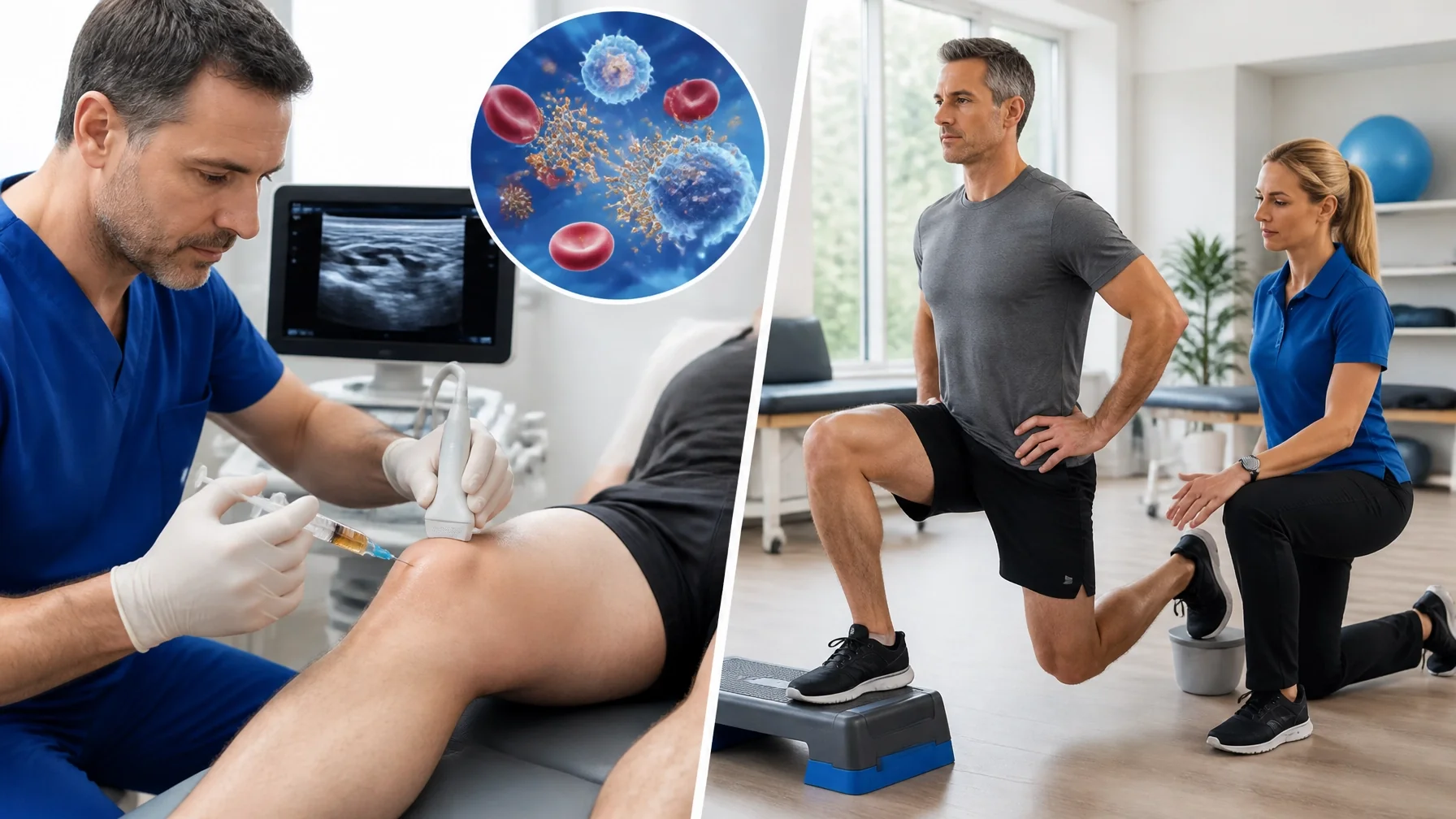
Many patients begin with:
- Two to three nonconsecutive sessions per week
- One to three sets per exercise
- Approximately eight to 12 controlled repetitions
- Moderate effort rather than maximal effort
- Gradual progression based on symptoms and function
Possible exercises include:
- Sit-to-stand from a chair
- Supported mini-squats
- Step-ups
- Straight-leg raises
- Hamstring curls
- Hip abduction
- Calf raises
- Stationary cycling
- Water-based walking or exercise
Movement quality matters. The knee should not collapse inward with every step. The pelvis, hip, ankle, foot, and trunk all influence knee loading.
A physical therapist or qualified clinician can assess:
- Knee tracking
- Hip control
- Ankle mobility
- Foot position
- Gait mechanics
- Balance
- Strength asymmetry
- Tolerance to stairs and uneven surfaces
Use the 24-Hour Rule
A reasonable exercise response may include mild discomfort during or after training. But pain should not escalate significantly or remain worse the next day.
If swelling, limping, or pain increases for more than 24 hours:
- Reduce the load.
- Reduce the range of motion.
- Reduce the number of sets.
- Slow the movement.
- Choose a lower-impact variation.
The goal is adaptation, not punishment.
The NIH/PMC review of non-surgical knee osteoarthritis management summarizes the central role of exercise, weight management, biomechanical interventions, and selected injections.
Step 5: The Decision Checkpoint: When Non-Surgical Knee Pain Treatment Is Not Enough
The knee-replacement decision should not be framed as:
“Surgery or do nothing?”
That is a false binary.
The better question is:
Has the patient received an accurate diagnosis, an adequate conservative program, and a realistic discussion of regenerative options: and does the remaining disability justify the risks of surgery?
Surgery may be appropriate when several factors align:
- Severe, persistent pain
- Pain at rest or during sleep
- Major difficulty walking, using stairs, or standing
- Significant loss of independence
- Advanced structural disease on weight-bearing imaging
- Symptoms that match the imaging findings
- Failure of a properly supervised non-surgical knee pain treatment program
- Failure or inadequate benefit from reasonable medications, therapy, and injections
- A medical condition and lifestyle that allow safe surgery and rehabilitation
Surgery should not be delayed when there is an urgent problem such as:
- Suspected joint infection
- Fracture
- Rapidly progressive structural collapse
- A locked knee from a significant mechanical lesion
- Severe neurological or vascular symptoms
- A tumor or other serious alternative diagnosis
Likewise, severe radiographic arthritis with relatively mild symptoms does not automatically equal a knee replacement. The image must match the lived experience.
Total knee replacement can be life-changing for the right patient. It can reduce pain and restore function. But it is still major surgery, with risks including infection, blood clots, stiffness, persistent pain, implant wear, and the possibility that pain from another source will remain.
The goal is not to avoid surgery at any cost. The goal is to make the decision with complete information rather than fear, sales pressure, or a radiology report written in a language designed to ruin your afternoon.
The Reframed Knee Decision
You do not need to choose between blind optimism and immediate replacement.
You can take a structured path:
- Diagnose the actual pain generator.
- Improve the metabolic and biological environment.
- Evaluate targeted regenerative options honestly.
- Restore strength and movement capacity progressively.
- Reassess function and decide whether surgery is truly justified.
This is how we move from degeneration versus resignation to evaluation, regeneration, and informed decision-making.
No treatment works for everyone. No injection replaces a proper diagnosis. No peptide erases severe structural disease. No exercise program should be designed by a motivational poster.
But many patients deserve more than the rushed knee-replacement-or-nothing conversation. A serious course of non-surgical knee pain treatment earns that conversation the information it has been missing.
Ready to Start Non-Surgical Knee Pain Treatment in Sarasota?
If chronic knee pain is limiting your walking, training, work, sleep, or quality of life, begin with an individualized evaluation: not a sales pitch.
At Stem Regen / ARTC.health, our team can assess your knee, overall biology, movement capacity, and potential treatment options through a patient-centered non-surgical knee pain treatment approach in Sarasota.
Contact ARTC.health to schedule a consultation, or learn more about our non-surgical joint repair program.
Your first step is not deciding on surgery. Your first step is finding out what is actually wrong: and what may still be repairable.
This article is for educational purposes only and does not replace an in-person medical evaluation. Regenerative therapies, peptide protocols, and biologic products have varying levels of evidence and may not be appropriate for every patient. Treatment decisions should be made with a qualified physician after reviewing your history, examination, imaging, medications, and individual risks.