
What Are the Best High-Protein Foods for Fat Loss?
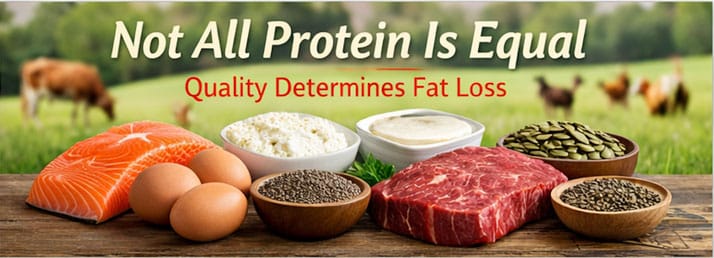
You’ve heard it a thousand times: “Eat more protein to lose fat.” But nobody tells you which protein sources actually support fat loss versus which ones sabotage your efforts with hidden sugars, inflammatory fats, and questionable additives.
Not all protein is created equal. The source matters. The quality matters. And for fat loss specifically, certain proteins dramatically outperform others.
Here are the top high-protein foods for fat loss—and why quality selection is non-negotiable.
The Top High-Protein Foods for Fat Loss
1. Eggs: Nature’s Perfect Protein
Eggs are arguably the most complete, bioavailable protein source available. They contain all essential amino acids in near-perfect ratios, plus critical nutrients that support fat loss.
Why eggs excel for fat loss:
- Complete amino acid profile — Every essential amino acid your body needs
- High satiety — Eggs keep you full for hours, reducing overall calorie intake
- Choline content — Supports liver function and fat metabolism
- B vitamins — Essential for energy production and metabolic function
- Affordable and versatile — Easy to incorporate into any meal
Quality matters: Choose pasture-raised eggs whenever possible. They contain higher omega-3 content, more vitamins, and come from healthier chickens. The difference in nutritional profile between pasture-raised and factory-farmed eggs is substantial.
There are many ways to cook eggs. My recommendation is to NOT cook the yolk all the way through in the air. You can cook it all the way through if it is underwater, however. The reason is that when cooked with air contact the cholesterol becomes oxidized which damages it and alters how your body processes it. Cholesterol is NOT harmful, in fact it is healthy, but once oxidized it is more of a negative than a positive.
Protein content: ~6 grams per large egg
2. Dairy (For Those Who Can Handle It)
If you tolerate dairy well, it’s an exceptional protein source for fat loss. The key word is tolerate—many people have undiagnosed dairy sensitivities that cause inflammation, bloating, and metabolic dysfunction.
Why dairy excels for fat loss:
- High-quality whey and casein proteins — Both highly bioavailable
- Calcium content — Research links calcium intake to improved fat metabolism as long as one also has sufficient magnesium which is typically low
- CLA (conjugated linoleic acid) — Particularly in grass-fed dairy, supports fat loss
- Satiety — Dairy protein is highly satiating
Best dairy choices:
- Greek yogurt (plain, full-fat)
- Cottage cheese (full-fat_
- Quality cheese (aged, grass-fed)
- Kefir (adds probiotic benefits)
- Milk can also be great. I prefer raw vs pasteurized and homogenized. Unfortunately this can be very difficult to find and various states outlawed it
Quality matters: Choose grass-fed, organic dairy whenever possible. Conventional dairy contains hormones, antibiotics, and inflammatory omega-6 fatty acids. Grass-fed dairy has superior fatty acid profiles and higher nutrient content.
Protein content: Greek yogurt ~17g per cup; Cottage cheese ~14g per half cup
Important note: If you experience bloating, skin issues, congestion, inflammation, or digestive problems after consuming dairy, you likely don’t tolerate it well. Eliminate it and choose other protein sources.
3. Fish: Lean Protein Plus Omega-3s
Fish delivers high-quality protein with the added benefit of anti-inflammatory omega-3 fatty acids—a combination that’s ideal for fat loss.
Why fish excels for fat loss:
- High protein, low calorie — Excellent protein-to-calorie ratio
- Omega-3 fatty acids — Reduce inflammation, improve insulin sensitivity, support fat metabolism
- Iodine and selenium — Support thyroid function (critical for metabolism). Most people are deficient in both of these essential minerals
- Highly bioavailable — Easy to digest and absorb
Best fish choices:
- Wild-caught salmon (omega-3 powerhouse)
- Sardines (sustainable, nutrient-dense)
- Mackerel (high omega-3 content)
- Cod (extremely lean)
- Trout (excellent omega-3 profile)
- Tuna, my personal favorite, ideally raw or seared on both sides. Many are concerned about mercury in tuna. Yes, there is some mercury as it is quite high on the food chain. I recommend intermittent use of EDTA to help chelate or remove mercury and other heavy metals from the body. I formulated a liposomal EDTA to make this much easier and more cost effective than IVs.
Quality matters: Always choose wild-caught over farm-raised. Farm-raised fish contain higher inflammatory omega-6 fatty acids, potential contaminants, and antibiotics. Wild-caught fish have superior fatty acid profiles and cleaner nutritional content.
Protein content: ~22-25g per 4oz serving
4. Meat (For Those Choosing to Eat It)
For those who include meat in their diet, it remains one of the most protein-dense, bioavailable options available.
Why meat excels for fat loss:
- Highest bioavailability — Animal protein is the most efficiently absorbed
- Complete amino acid profile — All essential amino acids in optimal ratios
- B12 and iron — Critical for energy production and metabolism
- Zinc — Supports hormone production and immune function
- Creatine and carnosine — Support muscle maintenance and performance
Best meat choices:
- Grass-fed beef (superior fatty acid profile)
- Pasture-raised chicken and turkey
- Lamb (often grass-fed by default)
- Bison (leaner than beef, typically grass-fed)
- Organ meats (extremely nutrient-dense)
Quality matters: The quality difference between grass-fed/pasture-raised and conventional meat is massive. Conventional meat contains antibiotics, hormones, and inflammatory fatty acid profiles. Grass-fed meat has higher omega-3s, CLA, and antioxidants. Select the best quality available—it’s worth the investment.
Protein content: ~25-30g per 4oz serving
5. Seeds: Plant-Based Protein Powerhouses
Seeds offer impressive protein content plus healthy fats, fiber, and minerals—making them excellent for fat loss, especially for those reducing animal protein intake.
Top seeds for protein:
Pumpkin Seeds (Pepitas)
- ~9g protein per ounce
- High in zinc (supports metabolism and hormones)
- Rich in magnesium (supports blood sugar regulation)
- Good source of iron
- Probably the best tasting of all protein powders
- Also contains a wide array of beneficial phytonutrients
Hemp Seeds
- ~10g protein per ounce
- Complete amino acid profile (rare for plant sources)
- Optimal omega-3 to omega-6 ratio
- Highly digestible
- Overall a very good choice although the taste can be difficult to fully mask
Chia Seeds
- ~5g protein per ounce
- Extremely high fiber (supports satiety)
- Omega-3 content
- Gel-forming fiber supports blood sugar stability
Sunflower Seeds
- ~6g protein per ounce
- High in vitamin E
- Good source of selenium
Quality matters: Choose raw or dry-roasted seeds without added oils or excessive salt. Most people are better off buying powdered versions of these seed proteins. Organic is preferable to avoid pesticide residues. Store properly to prevent rancidity.
6. Plankton: The Overlooked Protein Source
Spirulina and chlorella are freshwater algae (often called plankton) that deliver impressive protein content plus unique nutrients not found in other foods.
Spirulina
- ~60-70% protein by weight (one of the highest protein concentrations in any food)
- Complete amino acid profile
- Rich in B vitamins, iron, and antioxidants
- Contains phycocyanin (powerful anti-inflammatory compound)
- Supports detoxification
Chlorella
- ~50-60% protein by weight
- Complete amino acid profile
- Exceptional detoxification support (binds heavy metals)
- High chlorophyll content
- Supports immune function
Why plankton excels for fat loss:
- Nutrient density — Extremely high nutrients per calorie
- Detoxification support — Helps clear metabolic waste that impairs fat loss
- Anti-inflammatory — Reduces inflammation that promotes fat storage
- Blood sugar support — Helps stabilize glucose levels
Quality matters: Source matters enormously with spirulina and chlorella. Choose organic, tested for heavy metals and contaminants, from reputable sources. Low-quality algae can contain toxins that negate the benefits.
Protein content: ~4g per tablespoon of spirulina; ~3g per tablespoon of chlorella
Why Quality Selection Is Non-Negotiable
Throughout this list, you’ll notice a consistent theme: select the best quality available.
This isn’t elitist health advice—it’s practical biochemistry:
- Conventional animal products contain antibiotics, hormones, and inflammatory fatty acids that promote fat storage and metabolic dysfunction
- Grass-fed/pasture-raised products contain anti-inflammatory omega-3s, CLA, and higher nutrient content that support fat loss
- Pesticide-laden plants contain residues that disrupt hormones and metabolism
- Organic, properly sourced plants deliver nutrients without the toxic burden
The protein source that promotes fat loss when high-quality can actually inhibit fat loss when low-quality. Quality isn’t optional—it’s fundamental.
Supplementing Your Protein Intake:
Even with the best whole food choices, hitting optimal protein intake can be challenging—especially for those following plant-based diets, limiting overall food intake, or looking for convenient, clean options.
Peak Performance Plant Protein: The Solution
Protein is the most important macronutrient. It is the only one that you can survive on without the other two. Of course, many people are non-meat eaters for a variety of reasons and I’m one of them. I choose to not eat meat or poultry and haven’t for over 50 years. But I still want to get sufficient protein to maintain muscle mass and optimize health.

OFFICE HOURS
Monday
10:00am – 5:00pm
Tuesday
10:00am – 5:00pm
Wednesday
10:00am – 5:00pm
Thursday
10:00am – 5:00pm
Friday
10:00am – 4:00pm
Saturday and Sunday
Closed

