
By: Dr. Max MacCloud [DO, ND, PhD]
Let me save you some time on retatrutide.
If you’ve opened Instagram or LinkedIn in the last six months, you’ve seen the same carousel seventeen times: a pastel-colored infographic explaining that retatrutide is a “triple hormone receptor agonist” with a cute little diagram of three overlapping circles, like a Venn diagram drawn by someone who peaked in AP Biology. The caption invariably says something like “This changes EVERYTHING” followed by seventeen fire emojis and a link to a telehealth mill that will prescribe synthetic peptides to your goldfish if the copay clears.
Here’s the harsh truth: I actually read the trials. All of them.
The Phase 1s, the Phase 2s, the SURMOUNT extensions, the sub-analyses, and the dense statistical appendices where authors clearly wanted to sound the alarm bells about catabolic side effects but buried their findings in Table S4 like a body in a Florida swamp. I did this so you don’t have to wade through four hundred pages of FDA briefing documents. You’re welcome. Please send espresso. Just kidding, I actually don’t drink coffee at all.
After dissecting the raw data with the clinical detachment of a veteran progressive clinician who has watched dietary fads come and go like summer storms, I have come to a profound conclusion:
The weight loss number on your bathroom scale is the least interesting thing about this drug.
I know, I know. The mainstream media headlines all scream “24% BODY WEIGHT LOST!” like it’s a Black Friday blowout sale at a mortuary. But if you’re reading this article, presumably because you possess an IQ well above room temperature and a genuine, burning desire to not die prematurely, you already know that the scale is a pathological liar. It tells you how much gravity pulls on your carcass. It tells you nothing about what you actually are made of. And that distinction is where retatrutide gets genuinely weird, fascinating, and potentially dangerous if handled by amateurs.
The Hype Industrial Complex vs. Reality
Before we examine the biochemical machinery — or, given the subject matter, the alarming reduction thereof — let’s acknowledge the absolute circus surrounding modern anti-obesity medications.
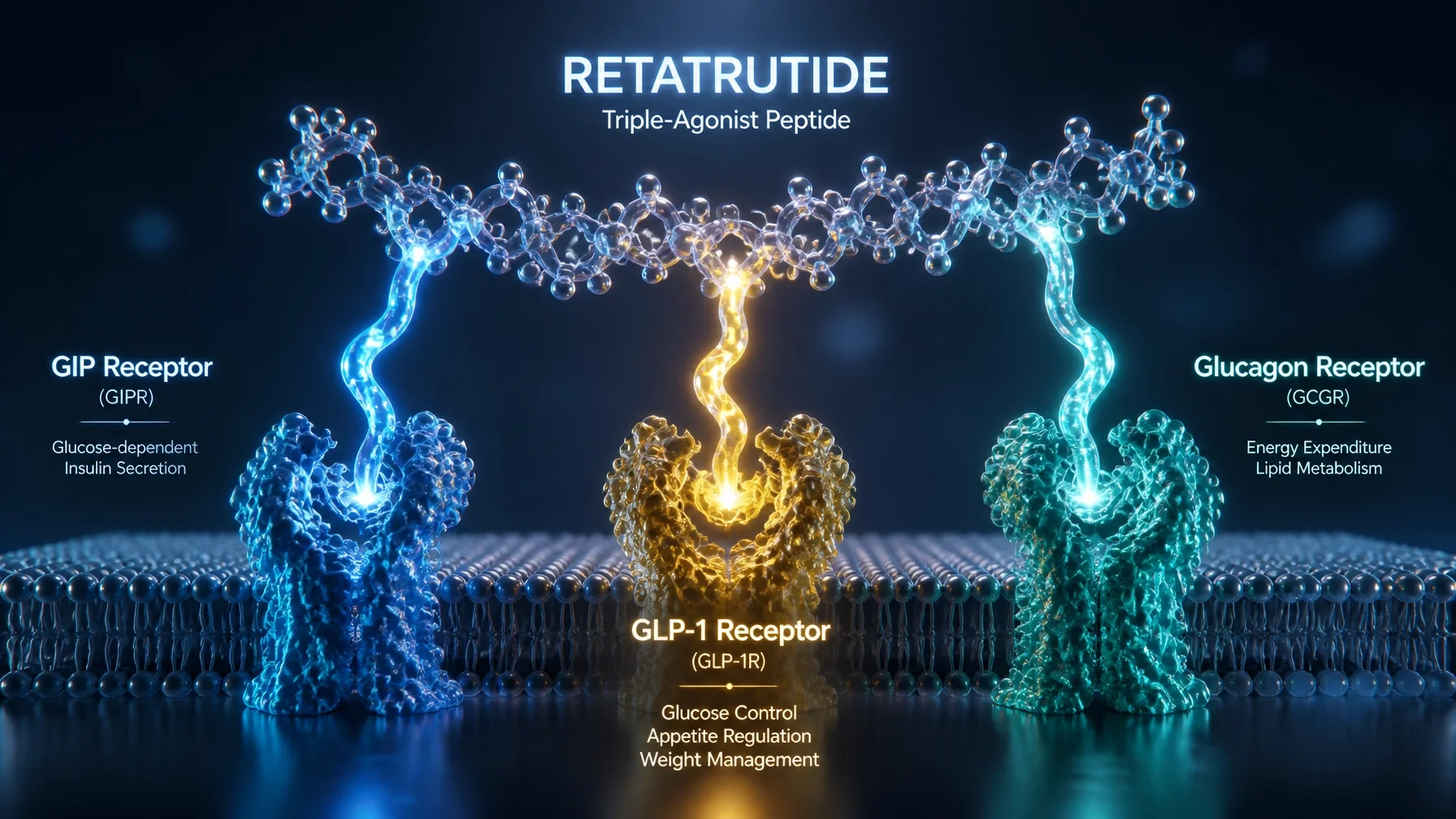
Retatrutide is Eli Lilly’s heavy-hitting follow-up act to tirzepatide (Mounjaro/Zepbound), which was already a follow-up act to semaglutide (Ozempic/Wegovy). It is classified as a triple agonist, meaning it tickles three distinct hormone receptors simultaneously:
- GLP-1 (Glucagon-Like Peptide-1): The appetite-crushing, gastric-emptying slowdown artist.
- GIP (Glucose-Dependent Insulinotropic Polypeptide): The metabolic flexibility enhancer and pancreatic beta-cell whisperer.
- Glucagon: The metabolic arsonist that promotes energy expenditure, lipolysis, and — here is where the plot thickens — proteolysis.
The glucagon receptor agonism is what separates retatrutide from its predecessors. For how it measures up against the mitochondrial approach, see our comparison of MOTS-c vs Retatrutide. Semaglutide is essentially a very expensive neurochemical trick to make you forget that food exists. Tirzepatide adds GIP, making your metabolic engine run smoother while you’re busy skipping lunch. Retatrutide adds glucagon, which is like hiring an elite demolition crew to burn down your fat stores while the GLP-1 and GIP team are already padlocking the kitchen doors.
The clinical output? In the Phase 2 obesity trial published in the New England Journal of Medicine, participants lost up to 24.2% of their total body weight at the highest dose over 48 weeks. That is roughly equivalent to strapping a medium-sized toddler to your torso for a decade and then permanently unstrapping them.
Yet every fitness influencer with a ring light and a God complex has looked at that 24% figure and declared retatrutide to be the “ultimate body recomposition tool.” Which is adorable. It is also fundamentally wrong. Total body weight and body composition are related in the exact same way your net worth and your emotional stability are related: technically correlated, but functionally messy and filled with deeply unpleasant surprises.
To understand why, we have to look beneath the skin — literally. For those exploring advanced therapeutics, our clinic provides comprehensive guidance through our cutting-edge peptide therapy protocols and advanced weight-loss peptide evaluations.
The Visceral Fat Story: Why Your Liver Is Having an Existential Crisis
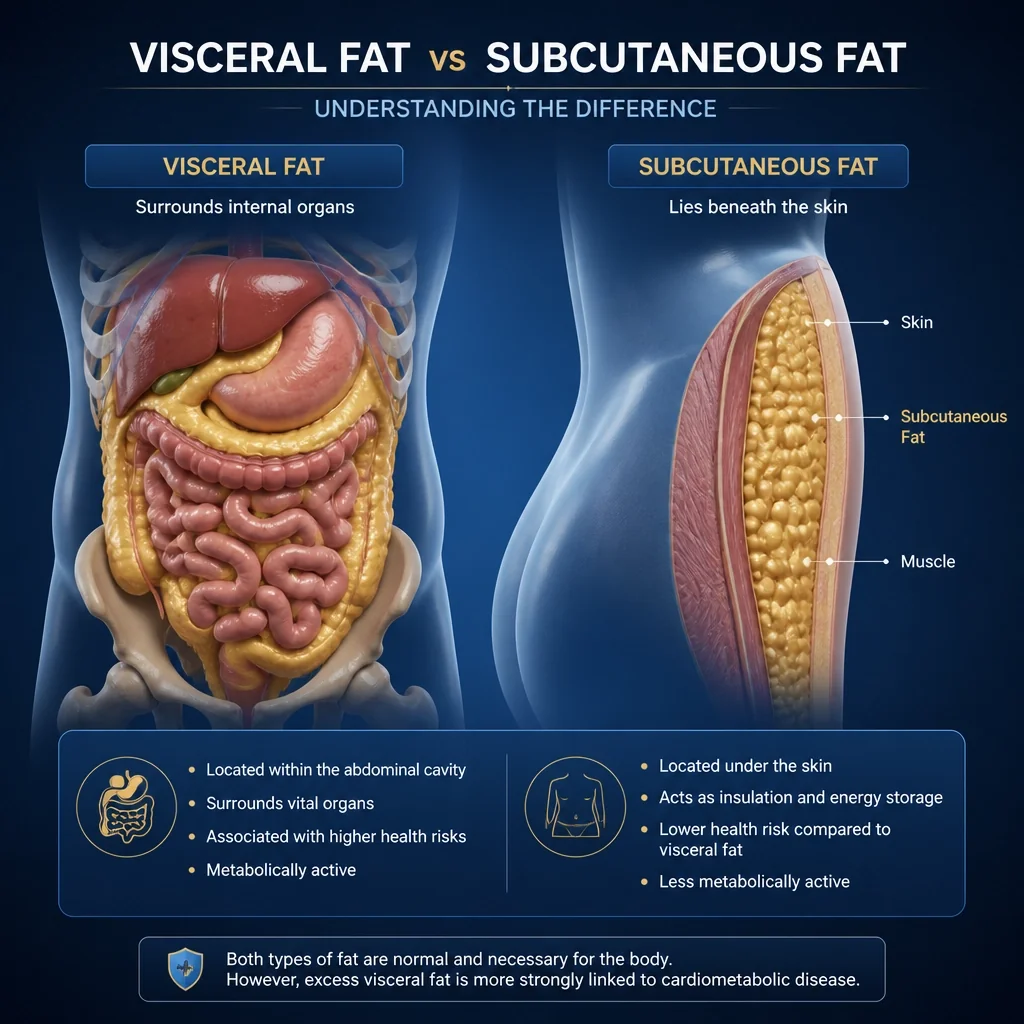
If you actually care about longevity — and if you’ve made it this far, I assume you do — there is precisely one adipose tissue depot that dictates whether you live to see eighty or check out early: Visceral Adipose Tissue (VAT).
We are not talking about the pinchable subcutaneous fat on your thighs or love handles. We are talking about the deep, marbled, visceral armor that wraps around your internal organs like a weighted blanket designed by a disgruntled toxicologist. Visceral fat is not passive padding. It is an active, endocrine-malignant organ that secretes inflammatory cytokines, drives systemic insulin resistance, and turns your liver into a luxury foie gras factory. High visceral fat is one of the single greatest predictors of all-cause mortality that doesn’t involve smoking unfiltered cigarettes while juggling chainsaws.
In the retatrutide clinical trials, visceral adipose tissue dropped like a stone during a market crash. We are talking about reductions in the neighborhood of 40% to 50% in high-dose cohorts. That is not mere weight loss; that is aggressive, life-extending anatomical renovation.
Even more staggering is the data on hepatic steatosis (liver fat). In a Phase 2a trial in participants with Metabolic Dysfunction-Associated Steatotic Liver Disease (MASLD) — which, let’s be entirely honest, includes a terrifying percentage of the modern Western population — retatrutide reduced liver fat content by an astonishing 80% to 82% in responders.
Approximately 30–40% of American adults have non-alcoholic fatty liver disease (NAFLD), now renamed MASLD. The most commonly cited estimate is around 1 in 3 adults, or roughly 33%. Some key context:
- NAFLD is the most common chronic liver condition in the United States — far outpacing alcohol-related liver disease and viral hepatitis combined.
- Among adults with obesity, the prevalence jumps to roughly 60–75%.
- Among those with type 2 diabetes, it climbs even higher — estimates range from 50–70%.
- Many people with NAFLD don’t know they have it; it’s often asymptomatic until it progresses to more advanced stages (NASH/MASH, fibrosis, or cirrhosis).
Let that sink into your gray matter. The mainstream medical establishment’s gold-standard intervention for fatty liver disease has historically been “lose some weight, walk around the block, and stop drinking high-fructose corn syrup, you animal.” That advice works about as well as telling an alcoholic to just sip wine more slowly. There are zero approved pharmacological blockbusters in conventional medicine that come close to clearing liver fat with this level of ruthless efficiency.
If you are optimizing for healthspan, you want to eviscerate visceral fat the way a seasoned CEO wants to slash bloated overhead. Retatrutide delivers on that front. But — and you knew there was a massive catch coming, because biology never gives you a free lunch — we must talk about what else packed its bags and left the building when the fat vanished.
The Muscle Problem: Congratulations, You’re Now Skinny-Fat in High Definition
Here is where my inner cynic transitions from mild irritation to full-scale professional outrage.
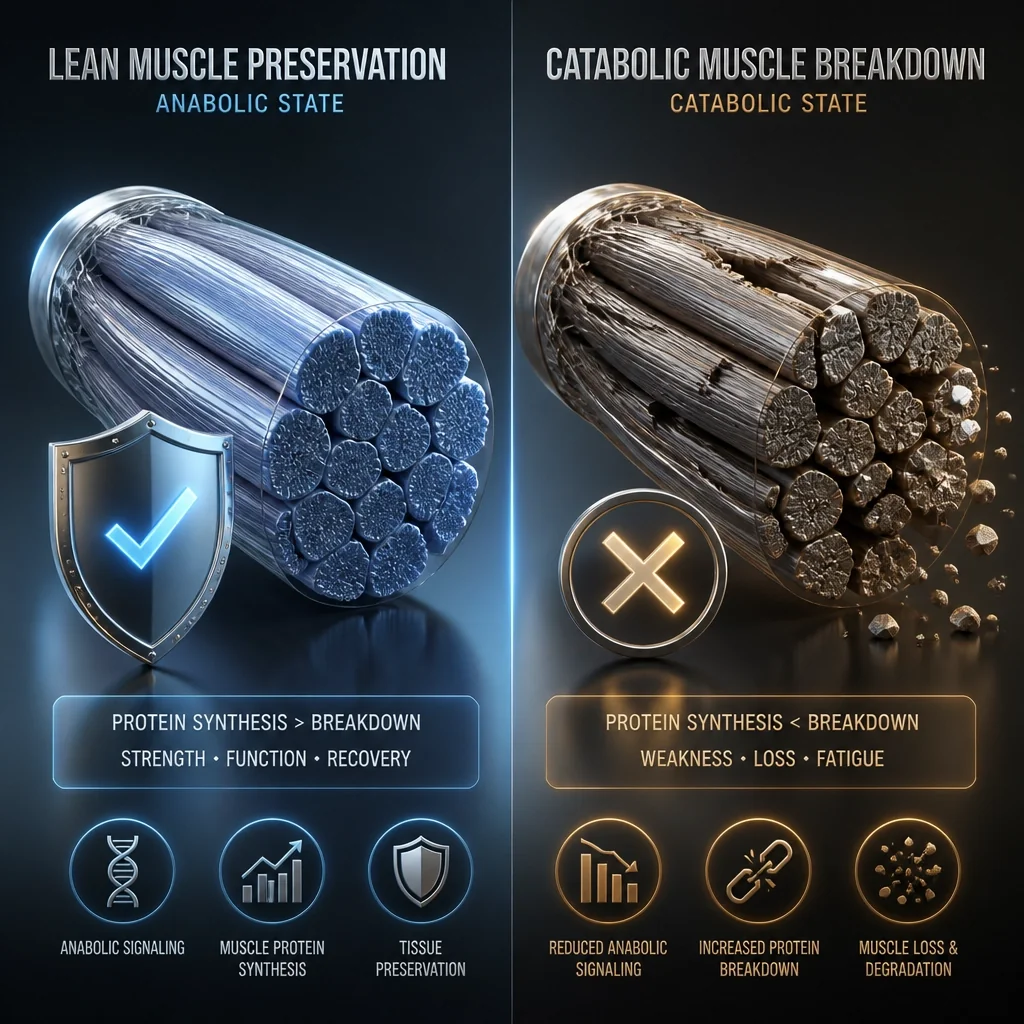
GLP-1 receptor agonists and their multi-agonist offspring possess a poorly disclosed, heavily sanitized side effect: they catabolize lean mass.
No, the drug does not sprout tiny legs and gnaw on your quadriceps in your sleep. But a deeply concerning percentage of the weight lost on these protocols — clinical data suggests anywhere from 20% to 40% of total weight shed — comes directly from lean muscle tissue.
This is a metabolic disaster disguised as a cosmetic triumph. Losing skeletal muscle while dropping pounds is the biochemical equivalent of selling the engine of your car to pay off a parking ticket. Sure, the car weighs less. But you just destroyed the very machinery required to move forward. Muscle is the body’s primary glucose disposal sink. It is where insulin sensitivity lives and breathes. Skeletal muscle protects you against falls, metabolic decline, frailty, and the ultimate indignity of needing assistance to stand up from a toilet at age seventy-five.
Sarcopenia — age-related muscle wasting — is an independent predictor of all-cause mortality. And “sarcopenic obesity,” where an individual carries excess adipose tissue while lacking functional muscle mass, is arguably the worst physiological state a human being can occupy.
When you add glucagon receptor agonism to the mix in retatrutide, the plot thickens into a Greek tragedy. Glucagon is fundamentally a catabolic hormone. Its evolutionary job is to break things down during energetic deficits: glycogenolysis, lipolysis, and yes, proteolysis (protein breakdown). When you deploy a triple agonist that suppresses your appetite (meaning you eat very little protein) while simultaneously signaling your liver and tissues with glucagon, you are running a dual-demolition derby through your body composition.
What do the trial papers say? They tend to be strategically vague. Absolute lean mass declines in lockstep with total weight loss. While researchers love to point out that your lean mass percentage remained relatively stable, maintaining your percentage while dropping forty pounds means you still jettisoned twelve pounds of functional muscle tissue.
In reality, where we hopefully all reside, any weight loss will include muscle loss unless you specifically work to maintain or build muscle. Regular diet- and exercise-induced weight loss carries a 25–30% loss of muscle. Using a GLP peptide increases that slightly, so don’t let anyone tell you that retatrutide won’t cause muscle loss — it will, unless you perform regular resistance training and consume sufficient protein.
If you are a forty-year-old desk worker or a fifty-five-year-old executive who hasn’t touched a barbell since high school gym class, losing twelve pounds of muscle is not a minor footnote. It is a functional catastrophe.
This is why at our center, we recommend pairing advanced peptide therapies with high-intensity, data-driven resistance training. Utilizing equipment like the ARX adaptive resistance systems allows our patients to stimulate maximum muscular force output safely and efficiently, ensuring that every ounce of muscle tissue is aggressively defended while metabolic fat is incinerated.
The Metabolic Rate Riddle: A Smaller, Sadder Version of Yourself?
Another variable the online hype merchants conveniently omit from their viral videos is what happens to your basal metabolic rate (BMR).
When humans lose weight rapidly through caloric restriction or pharmacological bludgeoning, evolution fights back with a vengeance. Our ancestors did not survive ice ages and famines by letting their bodies burn calories with reckless abandon. Adaptive thermogenesis kicks in: your total daily energy expenditure plummets, your thyroid output shifts down, and your cellular engines idle. This is simply a survival response to caloric deficits.
This is why most people who crash-diet gain back every ounce plus interest the moment they stop starving themselves. Their metabolism is now running on the fuel efficiency of a hibernating grizzly bear.
However, retatrutide introduces a fascinating plot twist through its glucagon component. Glucagon is a thermogenic hormone. It increases resting energy expenditure and metabolic rate. Early clinical pharmacodynamics suggest that retatrutide’s glucagon agonism might partially offset the punishing adaptive thermogenesis that typically ruins traditional weight loss efforts. In theory, your metabolic engine stays slightly warmer even as you downsize.
In theory.
Here is the inconvenient reality check: we do not have five-year or ten-year safety and efficacy data. The longest published retatrutide trials span roughly a year to eighteen months. That is not a lifetime study; that is a pilot episode. We do not know what happens to pancreatic beta-cells, alpha-cell hyperplasia (since glucagon-secreting cells are being tickled incessantly), or long-term metabolic flexibility once the drug is withdrawn. Biology has a 3.8-billion-year head start on pharmaceutical innovation, and Mother Nature always collects her debts in the end.
The Longevity Protocol: Treat Retatrutide Like a Metabolic Reset, Not a Miracle
If you are going to venture into the frontier of multi-agonist peptide therapy, you must abandon the magical thinking peddled by Instagram gurus.
As a clinician who evaluates biochemistry through an evidence-based lens, my firm stance is simple: treat powerful metabolic peptides like targeted metabolic repair. Another analogy is to treat them like chemotherapy. They are potent, highly effective biological tools, but they require strict protective protocols, aggressive safeguards, and clinical oversight.
Here is the uncompromising longevity blueprint for anyone utilizing advanced agents like retatrutide:
- Stop gazing at the scale: Throw away your bathroom scale or lock it in a closet. Mandate periodic body composition scans to track precise lean mass versus fat mass trajectories. If your weight loss is 30% muscle, you are failing the protocol.
- Aggressive protein optimization: You cannot starve your way to longevity. You must consume 1–2 grams of high-quality protein per pound of target body weight daily. If your appetite is artificially suppressed to zero, you must treat protein consumption as non-negotiable medicine. Plan and structure your meals around getting sufficient protein.
- Enforce real resistance training, ideally adaptive resistance training: Lifting tiny pink dumbbells three times a week will not save your muscle mass. You need high-tension, quantified mechanical loading. This is precisely why we incorporate computer-controlled adaptive resistance training like ARX into our clinical protocols: ensuring optimal eccentric and concentric loading without joint trauma.
- Build an exit strategy: Peptides are tools to reset your baseline, not permanent crutches for poor lifestyle choices. Incorporate gut microbiome restoration, mitochondrial support (such as the Mito Energy, Liposomal NAD+, Liposomal CoQ10, and Mito Boost we use in our mitochondrial support protocols), and regenerative tissue peptides during ramp-down phases to lock in metabolic health.
Conclusion: Play the Game Better
Retatrutide and next-generation triple agonists are not magic wands for the lazy. They are powerful, multi-system signaling molecules capable of dramatic visceral fat incineration and liver restoration — provided you possess the discipline to protect your musculoskeletal foundation.
Stop guessing with your metabolic health, and stop treating your body like an amateur science project fueled by internet rumors. The biological house always wins in the end. The secret to longevity isn’t cheating the game; it’s playing it with superior intelligence, precision, and clinical rigor.
Ready to Take Control of Your Biological Destiny?
If you’re going to use a tool as powerful as retatrutide, use it with a plan that protects your muscle, your liver, and your future. Contact ARTC today — call (941) 806-5511 or email info@artc.health. For premium nutritional formulations, visit mybodysymphony.com.
Your move.