
By: Dr. Max MacCloud, DO, ND, PhD
Quick answer: No published human trial has tested MOTS-c and retatrutide together. The rationale is mechanistic: retatrutide reduces food intake while raising energy demand, and MOTS-c affected muscle metabolism in animal studies. MOTS-c and retatrutide are not FDA-approved. Protein and resistance training, not any peptide, are what protect muscle during weight loss.
Imagine someone loses 40 pounds, then discovers they can barely carry the groceries. The scale calls that a win. Their muscles may disagree.
That is the problem this article is about: weight loss is not automatically health gain. A good plan should consider what a person loses, what they preserve, and how well they function afterward, not just how quickly the number drops.
Using MOTS-c and retatrutide together makes for an intriguing synergistic metabolic hypothesis. There are not published studies on using them in combination, but there are many case reports and a solid rationale.
As you surely know, very few peptides are FDA-approved, that includes MOTS-c. Retatrutide is also still considered to be investigational and not FDA-approved, although approval is imminent.
SS-31, also known as elamipretide, is investigational too although there are hundreds if not thousands of people using it with no ill effects.
What follows is a mechanistic rationale and a description of ARTC’s clinician-supervised practice, not established combination therapy, and not a dosing guide. This is for informational purposes and should not be considered to be medical advice.
The distinction matters. A thoughtful clinical plan is not the same thing as collecting compounds because a podcast made a biochemical pathway sound like a cheat code.
How Does Retatrutide Work?
Retatrutide activates three receptors: GLP-1, GIP, and glucagon. The GLP-1 and GIP effects are the familiar part: they influence appetite and satiety, and can slow gastric emptying. The glucagon receptor is the less commonly discussed arm, and an important part of what makes retatrutide different from the two other GLP-1 agonists (Semaglutide and Tirzepatide).
Glucagon receptor activity can increase energy expenditure and hepatic glucose output. In practical terms, retatrutide is designed to influence both energy intake and energy use. That is metabolically powerful. It is also a meaningful physiological demand, especially when appetite suppression leads someone to eat less protein, fewer micronutrients, and less overall food.
In a Phase 2 obesity trial, retatrutide produced substantial weight loss over 48 weeks. But weight loss is not a single tissue leaving the building. It can include fat and lean tissue, and the scale cannot tell you which one went out the door. Jastreboff and colleagues’ Phase 2 retatrutide trial describes the weight-loss findings and common gastrointestinal effects, as well as dose-related heart-rate increases that peaked around week 24 and then declined.
Three issues deserve particular attention during a large or rapid energy deficit:
- Lean mass: Across GLP-1-based weight-loss studies, the share of total weight lost that is measured as lean mass varies by study, drug, and method. A pooled analysis estimated roughly one quarter on average; the percentage is likely closer to 30-40%. These figures do not mean that 25-40% of someone’s muscle disappears, it just means that if you lose 10 lbs., 2.5-4 of it will be muscle unless you take steps to preserve it. DXA-measured lean mass includes more than skeletal muscle, and findings vary. Retatrutide’s Phase 2 body-composition substudy nevertheless recorded measurable lean-mass reductions in higher-dose groups. The retatrutide body-composition analysis is worth reading for the actual measurements and limitations.
- Please note that all calorie-deficit weight loss plans will cause a loss of both fat and lean body mass (muscle & organ reserve). Many people are under the misconception that this only happens with the new GLP weight loss peptides.
- Mitochondrial workload: Fat oxidation and energy demand can rise while total intake falls. If protein and micronutrient intake fall along with calories, the body has less raw material available while adapting to a changed energy budget. Mitochondria are part of that workload; they are not magic batteries with an unlimited warranty.
- Metabolic flexibility and glucose handling: Retatrutide’s receptor effects influence glucose and insulin dynamics, while glucagon signaling affects hepatic glucose output. Many people may tolerate those shifts, but individual history and medications matter. The goal is to identify potential problems with monitoring, not discover them by surprise.
Losing weight and preserving the capacity that supports daily life are related goals, but they are not identical.
What Is MOTS-c, and What Don’t We Know?
MOTS-c is a mitochondrial-derived peptide encoded in the mitochondrial 12S ribosomal RNA region. The foundational 2015 paper by Lee and colleagues proposed that MOTS-c influences metabolism through AMPK, a cellular energy-sensing pathway. In the proposed mechanism, MOTS-c affects the folate-dependent methionine cycle and purine synthesis, leading to accumulation of AICAR, a molecule that can activate AMPK. In preclinical studies, researchers also reported changes related to insulin sensitivity, glucose handling, fatty-acid oxidation, and physical capacity in mice.
That is interesting biology, but not human proof of clinical benefit. The proposed folate-cycle mechanism also raises questions about long-term use that human research has not answered. Human findings remain early, small, and largely focused on circulating levels, exercise-related responses, or biomarkers, not established patient outcomes.
For a careful explanation of the proposed mechanism, see Lee et al.’s original MOTS-c paper in Cell Metabolism.
Can MOTS-c and Retatrutide Be Taken Together?
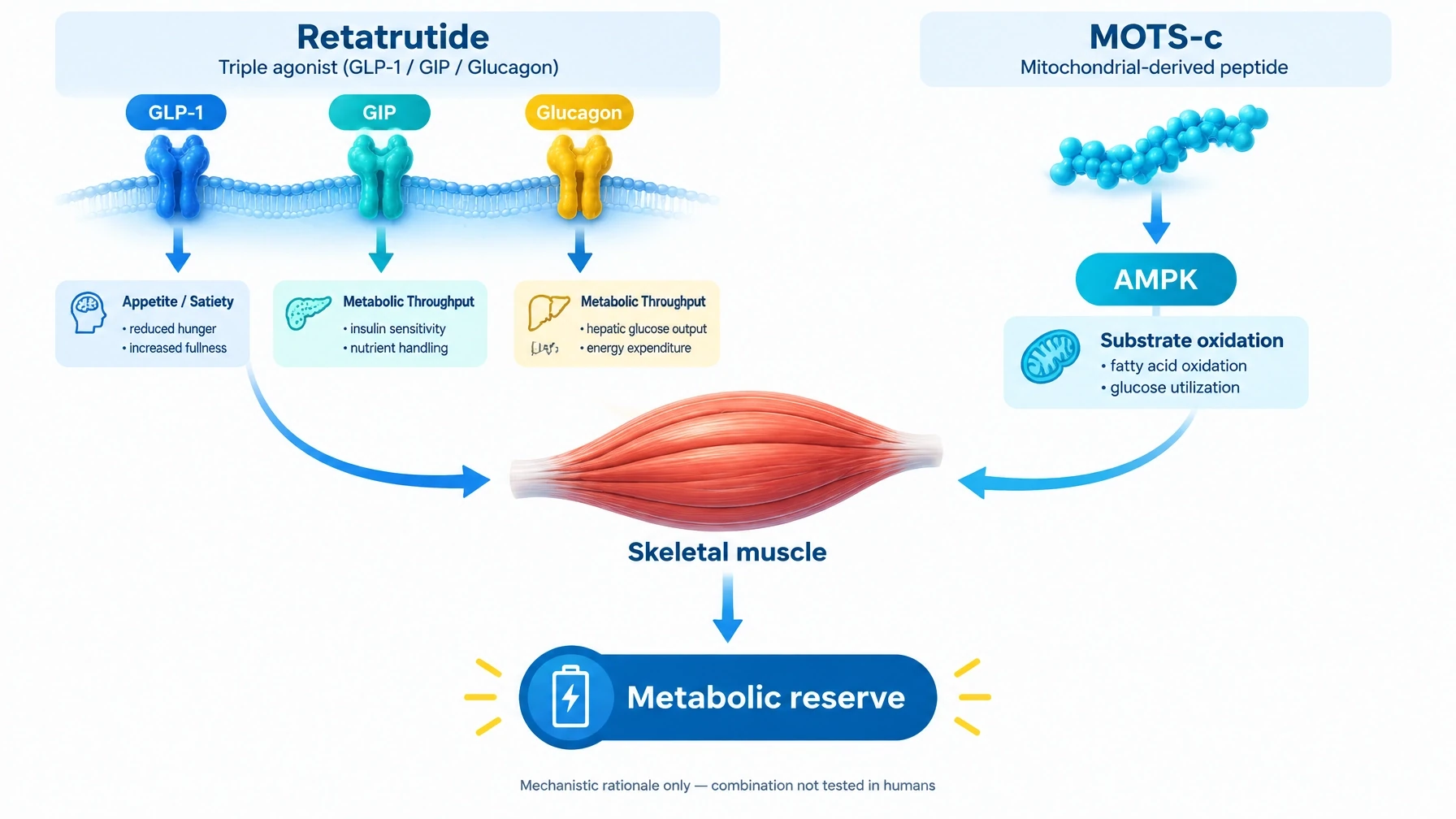
No published human trial has tested MOTS-c and retatrutide together, so the combination remains a hypothesis rather than an established therapy. The proposed rationale is that retatrutide and MOTS-c may influence different sides of a shared metabolic challenge.
Retatrutide’s three receptor arms affect appetite signaling and metabolic throughput. MOTS-c has preclinical signals involving AMPK and substrate oxidation. Both pathways intersect with the way cells process and use energy. That overlap makes the combination a question worth studying. It does not prove that combining them works better, is safer, or preserves muscle.
The shared tissue of interest is skeletal muscle. Retatrutide-associated weight loss can include lean-mass loss; MOTS-c’s preclinical signals make muscle metabolism and physical capacity relevant to the hypothesis. A reasonable research question is whether supporting mitochondrial function and substrate handling could help muscle adapt during weight loss. The honest answer today: nobody has established that MOTS-c prevents GLP-1-associated lean-mass loss. What’s more, that isn’t really the point. The issue is whether combining Retatrutide and MOTS-c might have a synergistic effect. Muscle can be maintained during a calorie-restricted diet by making sure that you are consuming sufficient protein (shoot for 1 gram per pound of target body weight per day) and doing resistance exercise.
The proposed endpoint should not be “more weight off.” It should be metabolic reserve: the capacity to maintain strength, function, and metabolic health while body composition changes. Our weight-management and metabolism approach should be judged by that broader objective, not a scale that reports one number and keeps the interesting details to itself.
Why ARTC Sequences SS-31 With or Before MOTS-c
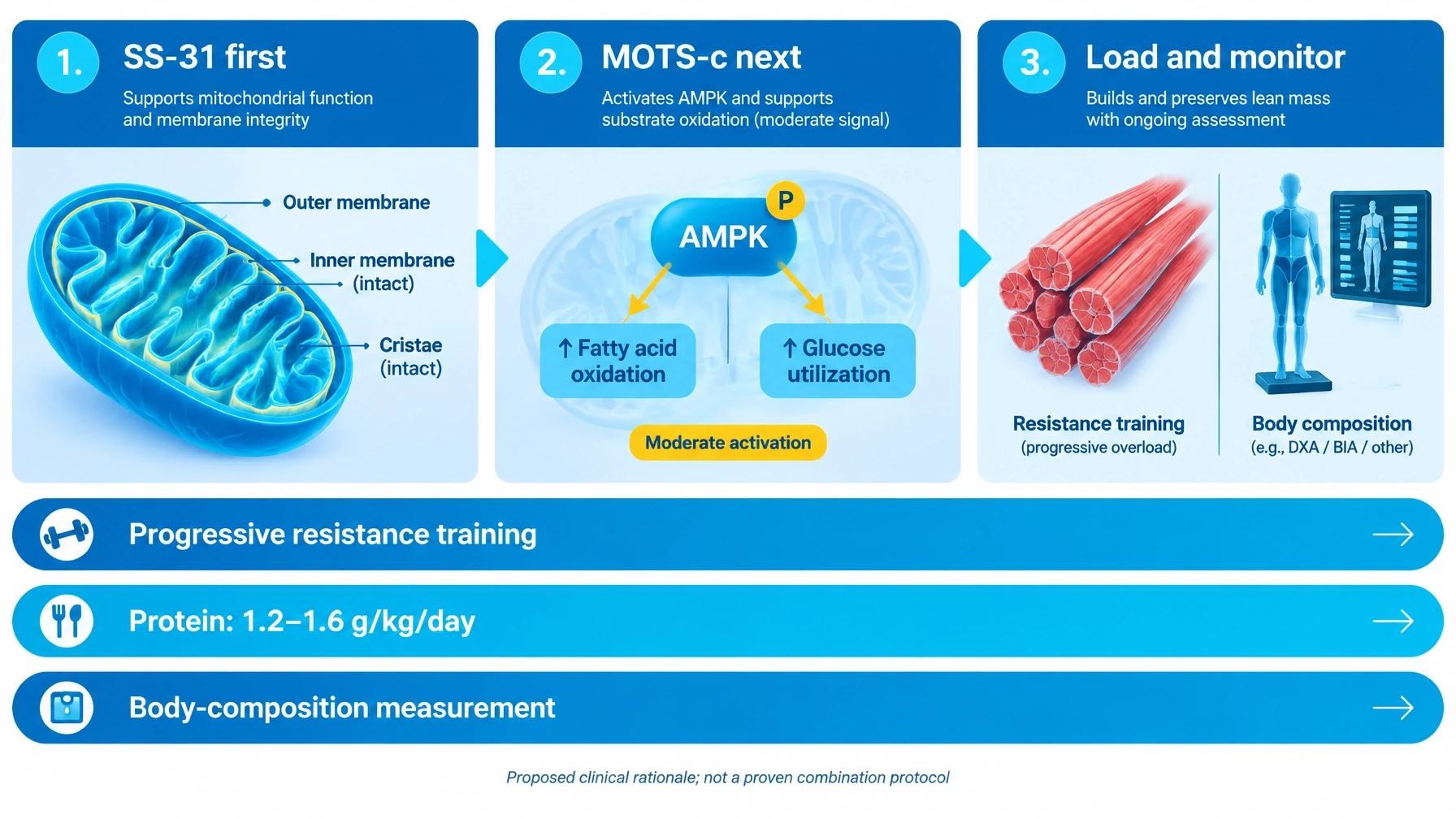
At ARTC, when we use MOTS-c, our standing practice is to run one to three cycles of SS-31 along with it. A cycle for MOTS-c is typically a 40mg vial. The physician determines the actual regimen for each patient. This is our sequencing rationale, not a protocol validated in trials of MOTS-c and retatrutide.
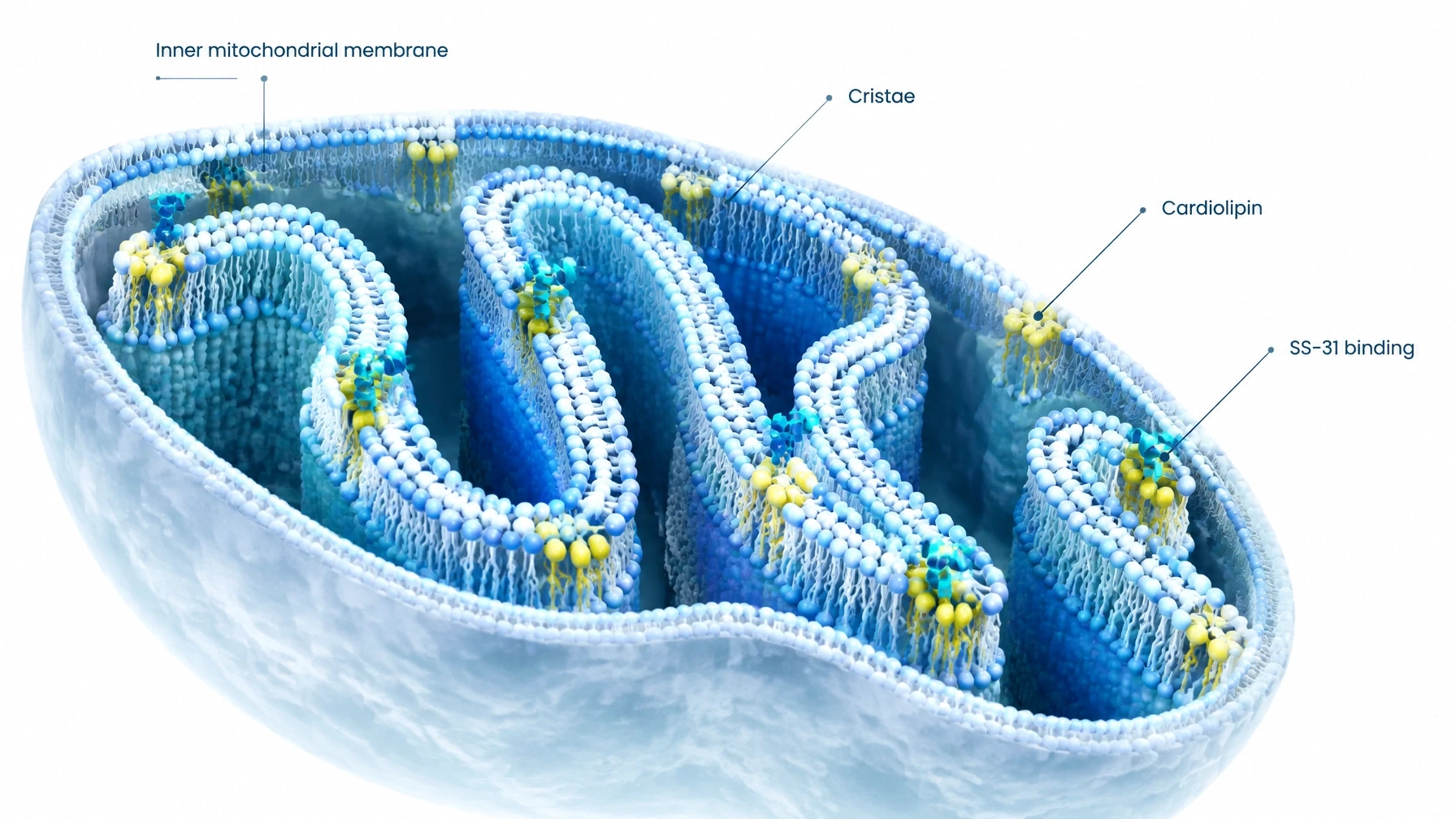
SS-31, or elamipretide, is a mitochondria-targeted tetrapeptide studied for its interaction with cardiolipin, a lipid in the inner mitochondrial membrane. That membrane helps organize cristae and supports the electron transport chain. The mechanistic idea is to support membrane structure and mitochondrial function before asking metabolic pathways to adapt to a changed workload. Everyone’s inner mitochondrial membranes get damaged over time and it is important to repair them as best you can before or while you are using MOTS-c to ramp up mitochondrial function.
The analogy: asking a mitochondrial-derived peptide to influence metabolism when the membrane environment may be compromised is like putting a performance tire on a bent rim. The tire may be impressive. The underlying problem remains.
But analogies are not clinical evidence. Elamipretide is still considered investigational and not FDA-approved at this time. Although some secondary functional signals have been reported in mitochondrial research, that does not establish membrane repair in a weight-loss setting. No human study has demonstrated that SS-31 before MOTS-c improves outcomes during retatrutide treatment. The MMPOWER-3 trial record and research on SS-31’s interaction with cardiolipin help distinguish the mechanistic rationale from the clinical evidence.
Our sequence is simple to explain: support membrane biology, then consider metabolic modulation, then load the system with resistance training and adequate nutrition. The logic is compelling to us. The evidence remains incomplete. Both facts belong in the same conversation.
How Do You Protect Muscle on Retatrutide?
GLP-1-class therapy without resistance training and adequate protein risks turning a weight-loss plan into a muscle-loss plan with a weight-loss side effect. That is not a knock on this peptide. It is a knock on care that prescribes an intervention and forgets to protect function.
A common protein target in weight-loss care is 1 gram of protein per pound of your goal weight per day, ideally distributed across meals and individualized to the patient. Progressive resistance training supplies the signal to maintain and build strength. Neither intervention is a decorative add-on.
Resistance training is an absolute necessity for healthy weight loss and overall health. The latest variation on that is called ARX for adaptive resistance training. It is particularly beneficial for people who are deconditioned, older, or managing joint pain because loading can be adjusted to ability and tolerance. ARTC’s ARX capability can provide a supervised option for loading, but the principle is broader than any equipment: train progressively and appropriately. Read more about adaptive resistance training benefits.
No peptide replaces protein or resistance training. If you will do only one thing, prioritize training and protein, not the injection. ARTC’s position on GLP-1 dosing follows the same logic: the lowest effective dose, with the goal of the best body composition and function at the end, not the fastest scale movement.
Is Taking MOTS-c and Retatrutide Together Safe?
There are no published human combination data for MOTS-c plus retatrutide, and there aren’t likely to be until both are FDA approved although the chances of MOTS-c being officially approved are minuscule. It can’t be patented so no one will spend the money needed for it to be FDA approved.
Retatrutide remains investigational and is not yet FDA-approved. Trial considerations include gastrointestinal effects, dose-related heart-rate changes, treatment discontinuation, and clinical cautions relevant to incretin therapies. A physician should review personal or family history of medullary thyroid carcinoma or MEN2, pancreatitis, gastroparesis, diabetic retinopathy, and pregnancy considerations. People taking insulin or a sulfonylurea need active medication management because improved insulin sensitivity can increase hypoglycemia risk.
MOTS-c is not FDA-approved. Human evidence is early, and the long-term implications of its proposed folate-cycle mechanism remain unclear. Products sold through unregulated channels create questions of identity, purity, and sterility. That is a quality-control problem, not a bargain.
SS-31 is investigational, not FDA-approved, and its pivotal results are mixed. None of these uncertainties should be buried beneath a confident-sounding stack name.
Before considering any such approach, the non-negotiables are diagnosis, current-medication review, appropriate baseline labs, blood pressure and heart rate, and body-composition assessment, not a scale alone. Physician supervision and follow-up matter throughout. We measure response instead of assuming it. Anyone selling these compounds without baseline information and a plan to monitor the patient is not offering careful medicine.
We are not telling anyone to buy peptides online. And we are not presenting peptides as a way around the fundamentals. We do have them available in office for our patients.
The 5Ms and the Bigger Plan
ARTC’s 5Ms framework makes the rationale more practical:
- Microvascular health: delivery of oxygen and nutrients to tissue.
- Mitochondrial health: the energy-producing machinery under discussion.
- Metabolic balance: glucose, insulin, and substrate handling.
- Metabolic reserve: the capacity that supports function and resilience.
- Membrane health: the rationale behind considering SS-31 before MOTS-c.
Biological Sovereignty means your tissue, your data, and your decision. It also means measuring how you respond rather than guessing from a trend or a testimonial.
The Wolverine Healing Protocol is the wider system around an intervention: oxygen therapies for delivery and mitochondrial stimulus, peptide support when appropriate, adaptive resistance training for loading, nutrition for raw materials, and sleep for rest and recovery. That is one reason ARTC runs EWOT and HBOT alongside metabolic protocols rather than treating them as unrelated services. These therapies are not proven to make the MOTS-c/retatrutide combination effective; they are components of a broader, individualized care plan.
The First Step Is an Evaluation, Not a Stack
The question is not simply whether two compounds can be combined. It is whether the proposed approach fits your health history, medications, goals, and measurable needs, and whether its uncertainties make sense to you.
For anyone exploring peptide therapy for longevity, start with an evaluation that considers body composition, strength, nutrition, and metabolic markers. Learn more about the mitochondria-longevity connection and our peptide-therapy services, and ask directly what is established, what is experimental, and what will be monitored. Contact ARTC to discuss an individualized evaluation.
This article is for educational purposes only and is not medical advice, diagnosis, or a treatment recommendation. MOTS-c, retatrutide, and SS-31 are investigational and are not FDA-approved for the uses discussed here. Any treatment decision requires evaluation and supervision by a qualified physician.
Your move.