
By: Dr. Max MacCloud, DO, ND, PhD
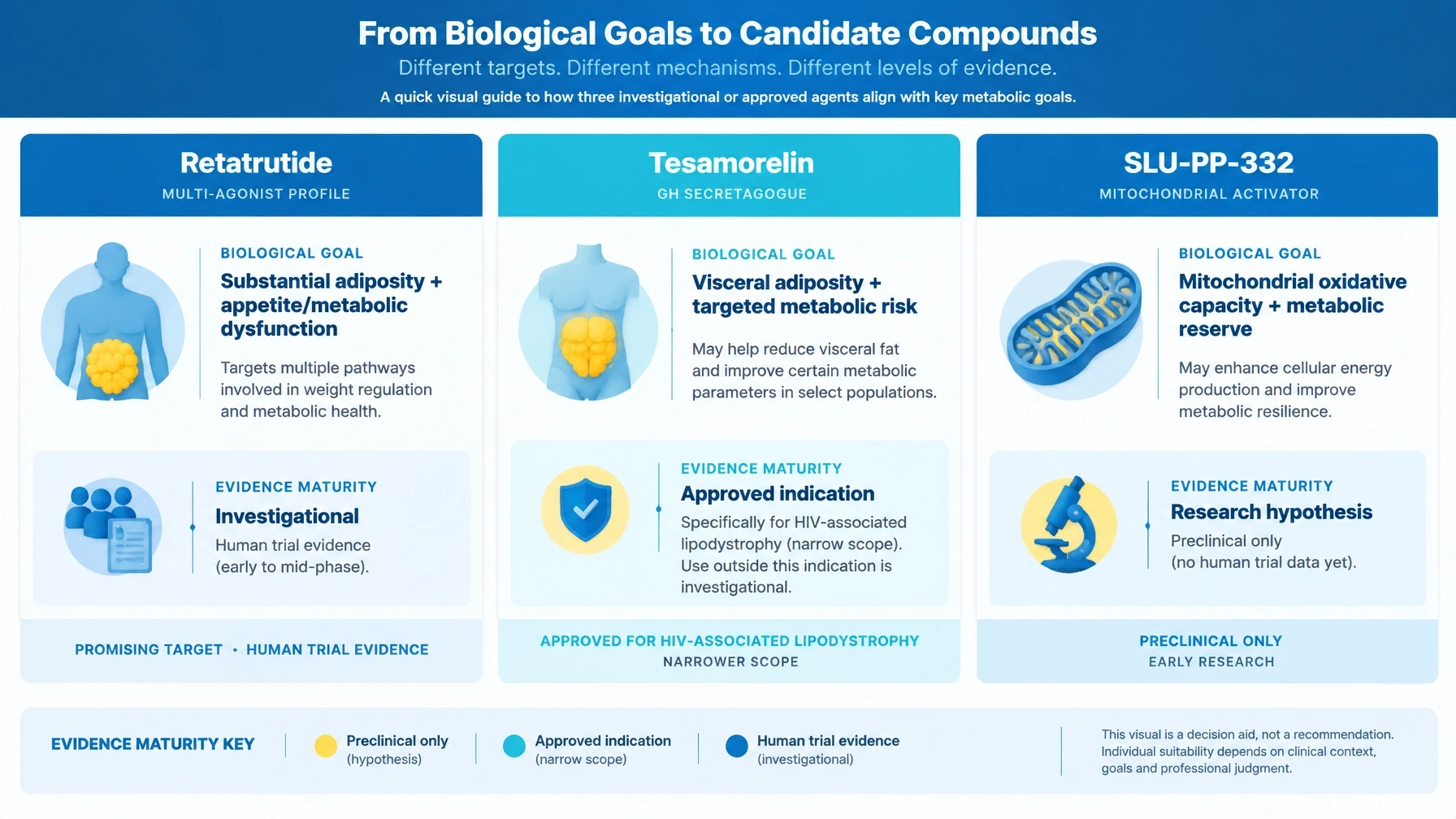
Quick answer: SLU-PP-332 vs retatrutide vs tesamorelin is a comparison of three different tools. Retatrutide is a peptide with substantial human weight-loss data. Tesamorelin is a peptide approved to reduce visceral fat in a specific population. SLU-PP-332 is a small-molecule exercise mimetic studied only in mice. They address different problems.
People often group SLU-PP-332, retatrutide, and tesamorelin together as “metabolic peptides.” That label sounds tidy. Biologically, it is not.
Retatrutide and tesamorelin are peptides. SLU-PP-332 is not. It is a synthetic small molecule designed to activate estrogen-related receptors. Their mechanisms, human evidence, likely benefits, and unanswered questions are different enough that comparing them is useful only if we begin with what each one actually does.
The short version: retatrutide is a broad metabolic intervention with substantial weight-loss data; tesamorelin is a more targeted approach to reducing visceral adipose tissue with an established, specific clinical indication; and SLU-PP-332 is an intriguing exercise-mimetic supported by animal research, not human trials.
That distinction matters for anyone considering longevity and performance optimization. A promising mechanism is not the same thing as proven benefit. And “most talked about” is not a clinical category.
Three mechanisms, not three versions of the same therapy
SLU-PP-332: an exercise-mimetic research compound
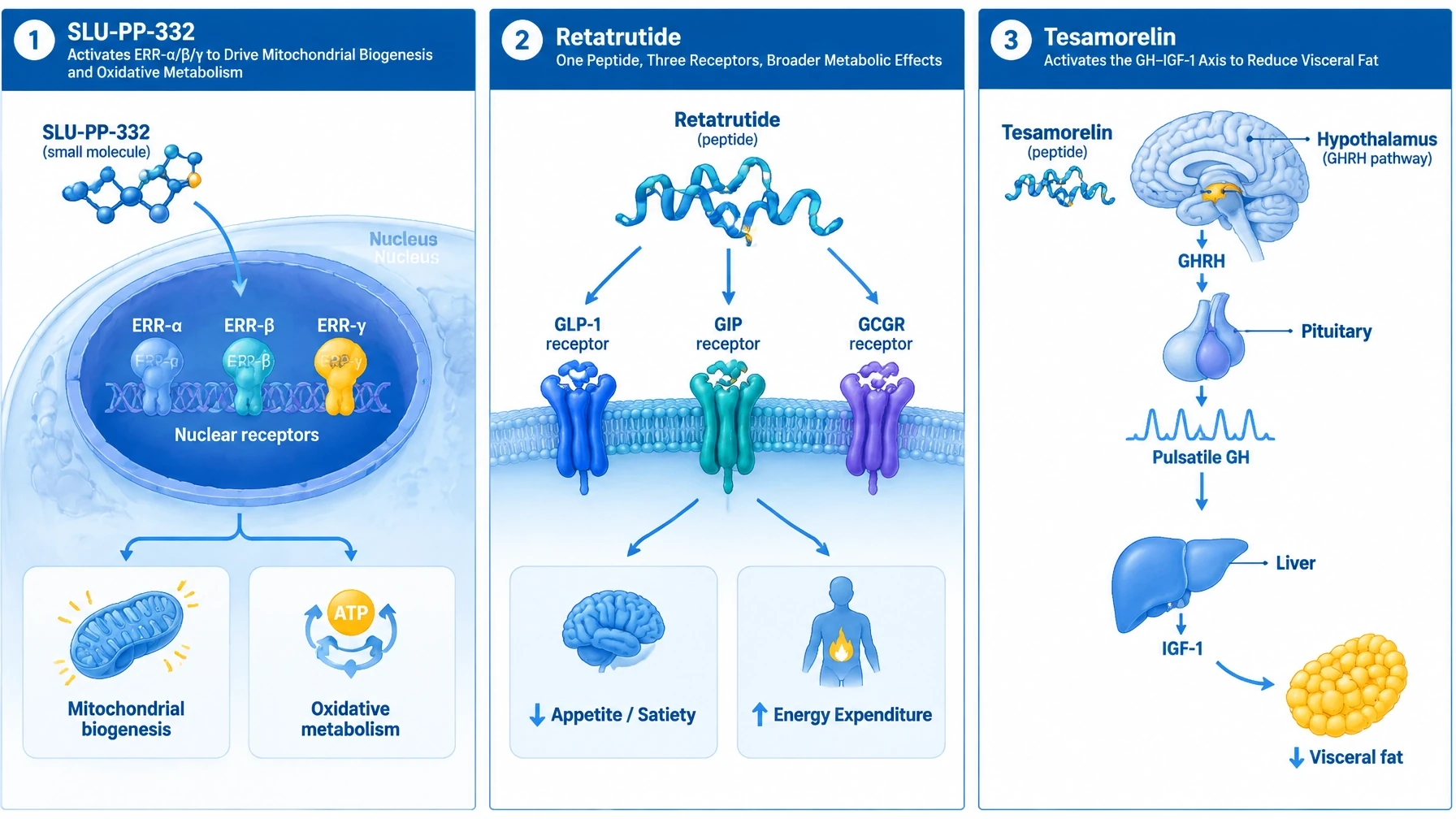
SLU-PP-332 is a synthetic agonist of ERR-alpha, ERR-beta, and ERR-gamma — which are nuclear receptors involved in regulating energy metabolism. Despite the name, these receptors are not estrogen receptors. They are nuclear receptors that help control genes related to mitochondrial function, fatty-acid oxidation, and oxidative metabolism.
The idea is to pharmacologically activate some of the transcriptional programs that exercise normally stimulates: increased oxidative capacity, more mitochondrial activity, and adaptations associated with endurance. In mice, the results have been interesting. Published preclinical work reported increased energy expenditure and fatty-acid oxidation, along with reduced fat accumulation in obesity models. In one experiment, fatty-acid oxidation increased by 25% in treated mice; in diet-induced obese mice, fat mass fell relative to the control group. These are mouse findings, not predicted human outcomes.
Where might it fit in future research? Possibly in mitochondrial health, oxidative capacity, or metabolic reserve, perhaps for people who cannot train hard enough to generate a comparable adaptation. That is a hypothesis worth watching, not a treatment claim.
The strongest source to date is the preclinical study of SLU-PP-332’s effects on metabolism in mice. The biology is compelling, but the human evidence does not yet exist.
Retatrutide: appetite, satiety, and metabolic throughput
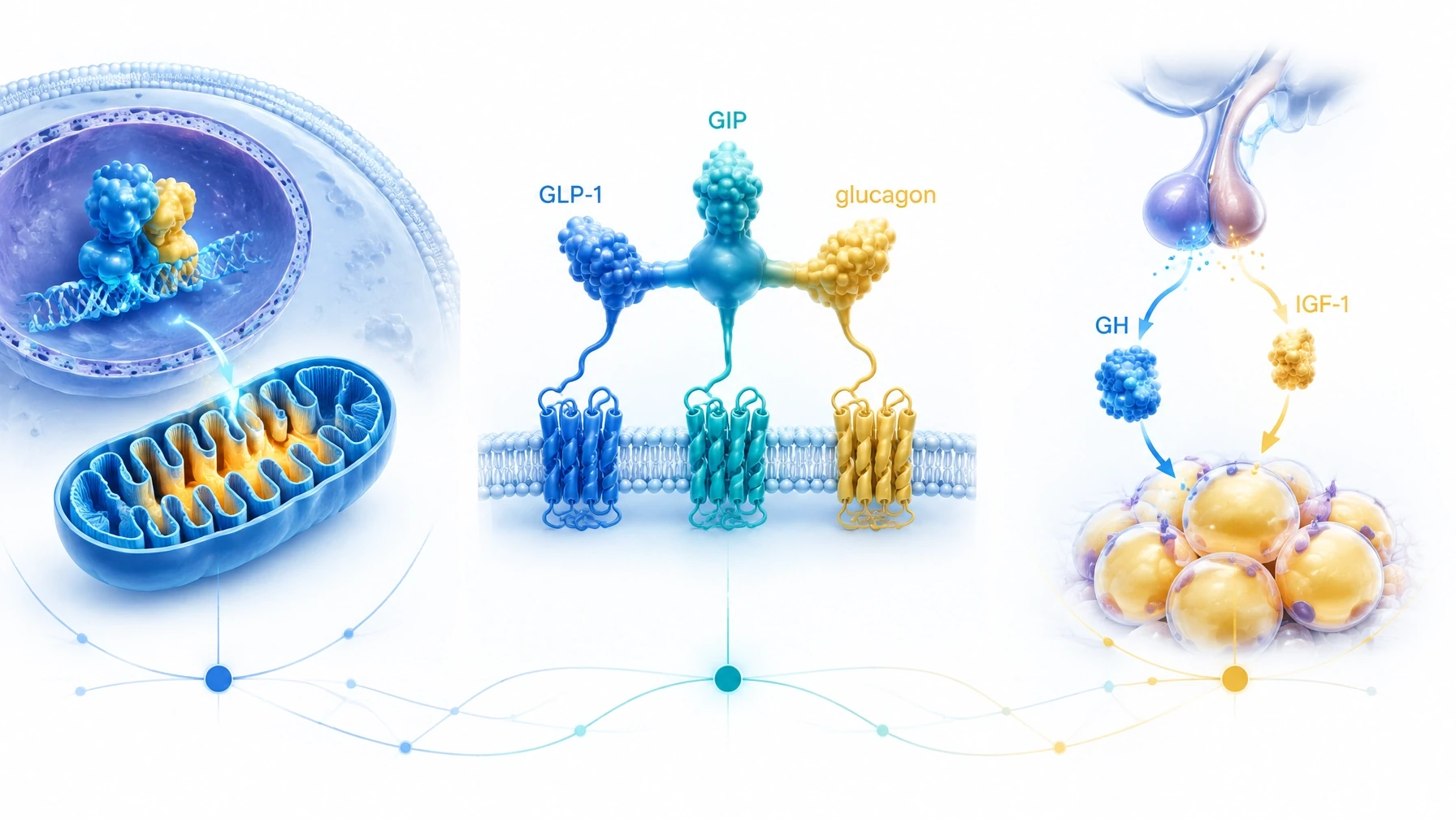
Retatrutide is one engineered peptide that activates three receptors: GLP-1, GIP, and glucagon.
The incretin pathways, GLP-1 and GIP, affect appetite, satiety, insulin response, and gastric emptying. The glucagon-receptor activity is the differentiator: it is intended to increase energy expenditure and influence hepatic glucose output. Put simply, retatrutide may reduce intake while also pushing metabolic throughput in a different direction. That is a powerful combination. It is also a demand on the system, not a free lunch. Biology has yet to invent one; the pharmaceutical industry has tried to sell us on the free lunch fantasy for decades.
In the 48-week Phase 2 obesity trial by Jastreboff and colleagues, average weight change reached −24.2% at the highest studied dose, compared with −2.1% with placebo. The finding attracted attention for good reason. Real world reports, based on many thousands of people using this yet to be approved peptide, indicate that it works extremely well. The NEJM Phase 2 retatrutide trial is the key published human study.
The trade-offs deserve equal attention. Gastrointestinal effects (including nausea, diarrhea, vomiting, and constipation) were common, particularly during dose escalation. This is why we recommend staying with the lowest effective dose. In the Phase 2 trial, discontinuation due to adverse events ranged from 6% to 16% across retatrutide groups, compared with none in the placebo group. Heart rate increased in a dose-related manner, peaked around week 24, and later declined.
Weight loss is not necessarily fat alone. Some lean mass can be lost during substantial weight reduction. In a body-composition substudy in people with type 2 diabetes, retatrutide reduced fat mass; the proportion of weight loss attributable to lean-mass loss was not shown to be uniquely better than comparable treatments. That is a limited analysis, not proof that muscle loss is inevitable, and not proof that it is prevented. See the retatrutide body-composition analysis.
Many people, and doctors, are under the misconception that these peptides cause substantial loss of muscle. That, my friends, is true of any calorie-restricted diet. It is also quite preventable by consuming sufficient protein and performing resistance training.
Retatrutide is in Phase 3 development. Its fit is most plausible for someone with significant adiposity and metabolic dysfunction who needs a substantial lever and can tolerate the physiological and gastrointestinal demands.
Tesamorelin: targeted visceral-fat biology
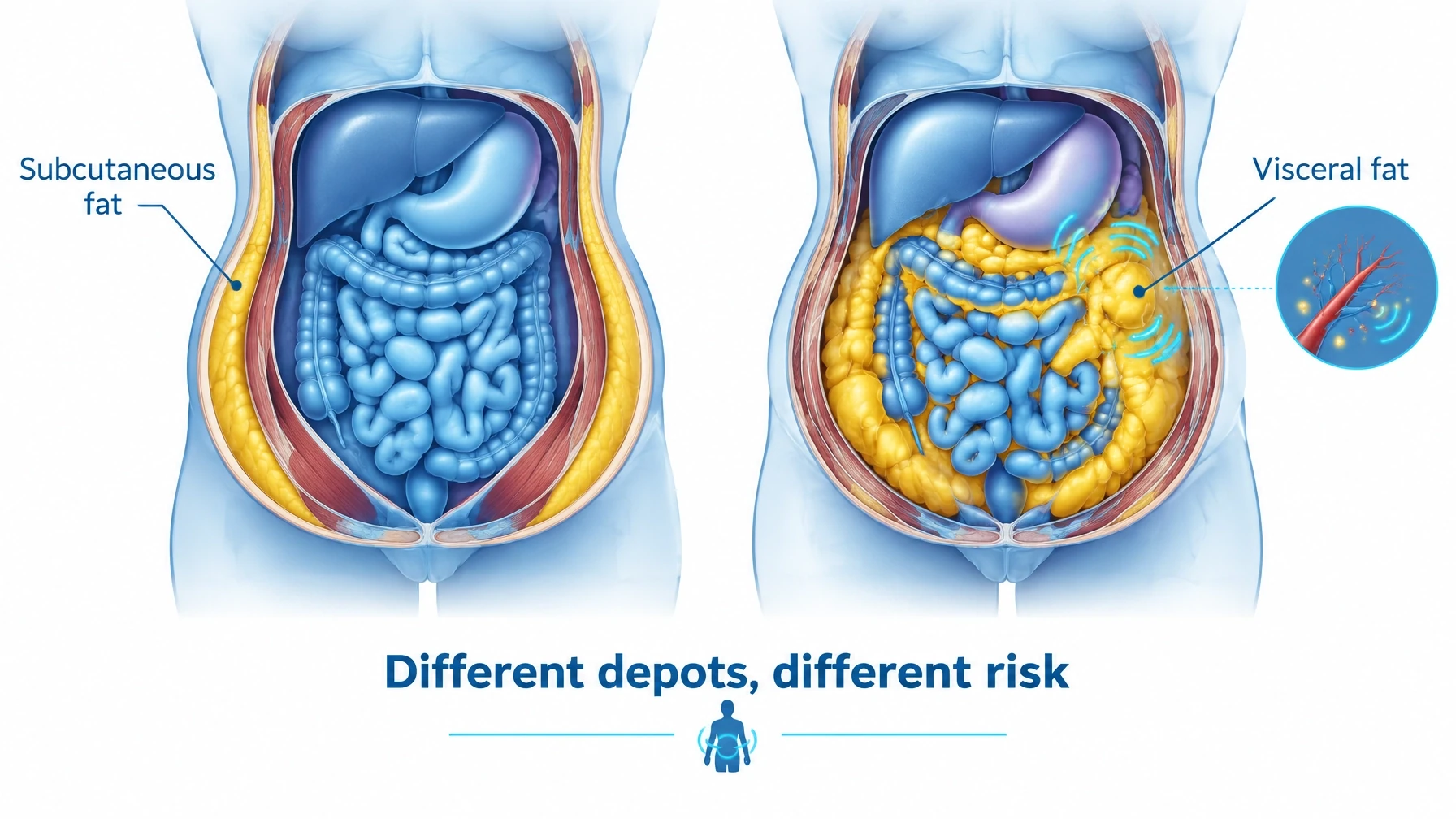
Tesamorelin is a stabilized growth-hormone-releasing hormone (GHRH) analog. Rather than supplying growth hormone directly, it signals the pituitary to release endogenous GH, which can increase IGF-1 downstream. The clinically interesting feature is its effect on visceral adipose tissue (VAT), the fat stored inside the abdomen around the internal organs.
In a randomized NEJM trial involving adults with HIV-associated lipodystrophy and excess abdominal fat, tesamorelin reduced CT-measured visceral adipose tissue by 15.2% over 26 weeks; the placebo group increased by 5.0%. That is a depot-specific result, not a claim that the drug is a general weight-loss therapy. The Falutz and colleagues tesamorelin trial is an important reference.
Tesamorelin is one of the three with an FDA-approved product for a defined indication: reducing excess abdominal fat in adults with HIV-associated lipodystrophy. It is not approved as a general obesity treatment. Smaller studies have explored non-HIV populations, including people with abdominal obesity and reduced GH secretion; that research is continuing, not established general practice. The anecdotal reports are that it does indeed work for people who don’t have HIV-associated lipodystrophy.
This is an important distinction: weight loss and reduced metabolic risk are not the same measurement. A therapy that targets visceral adipose tissue may change a clinically relevant fat depot, reducing various health risks, but it does not necessarily lead to a dramatic change on the bathroom scale.
Tesamorelin is not benign or appropriate for everyone. Its GH/IGF-1 axis effects call for monitoring IGF-1 and glucose status; it may affect glucose tolerance, and fluid retention, joint symptoms, and injection-site reactions are possible. The prescribing information lists contraindications including disruption of the hypothalamic-pituitary axis, active malignancy, and pregnancy. The current tesamorelin prescribing information provides the detailed safety and indication information.
Why the peptide pipeline looks like this
Drug development is expensive. A full program can cost hundreds of millions to billions of dollars, and a sponsor needs a plausible way to protect its investment and earn a return. Naturally occurring sequences and short endogenous peptides can be difficult to patent broadly in their unmodified form. That can make a large development program commercially unattractive even when the biology is worth studying.
The result is a pipeline shaped partly by commercial logic: developers create modified, patentable molecules such as retatrutide; sponsors pursue defined indications large enough to fund clinical trials, as happened with tesamorelin; and other promising compounds remain in research because no sponsor has built a development program around them.
For an unmodified, naturally occurring peptide, that usually means there is no realistic path at all. The economics do not work. The compounds that do get developed are the ones somebody figured out how to own: engineered analogs like retatrutide, or a molecule carried through a narrow, fundable indication like tesamorelin. And that tells you something important about how to read the landscape. The absence of a development program is not evidence a compound fails, and it is not evidence it works. It means nobody could make money on it.
When approval does happen, here is what it actually represents: a sponsor funded the trials, the FDA reviewed the evidence for one specific use, and the manufacturing was inspected. That is a quality and accountability framework. It is not a verdict on every off-label use, and its absence is not a verdict either way.
One practical point: unregulated supply can raise questions about identity, purity, and sterility. Any use belongs under physician supervision, with appropriate baseline labs and follow-up monitoring.
Head-to-head: which problem does each address?
| SLU-PP-332 | Retatrutide | Tesamorelin | |
|---|---|---|---|
| Molecule and target | Synthetic small molecule; ERR-alpha/beta/gamma | Peptide; GLP-1, GIP, and glucagon receptors | Peptide; GHRH receptor, stimulating endogenous GH |
| Mechanism in plain language | Activates a gene program associated with oxidative metabolism | Influences appetite and satiety while adding glucagon-receptor activity | Increases pulsatile GH signaling and targets visceral fat biology |
| Human evidence stage | Preclinical; mouse studies | Phase 3 development; Phase 2 human data published | Approved for a specific HIV-associated lipodystrophy indication |
| What it may do best | Potential mitochondrial and endurance-related adaptation; hypothesis only | Substantial weight reduction in human trial data | Reduction of visceral adipose tissue in the studied population |
| Lean mass and muscle | No human data; mouse findings do not establish human muscle preservation | Some lean mass may be lost with weight loss; body-composition results do not prove unique muscle sparing | Trials did not show the same pattern of overall weight loss; GH/IGF-1 effects still need monitoring |
| Appetite, energy, or fat depot? | No demonstrated human appetite effect; preclinical oxidative-metabolism focus | Incretin effects on appetite/satiety plus glucagon-receptor activity | Targets visceral adipose tissue; not a general appetite suppressant |
| Monitoring focus | No human protocol or established monitoring standard | Clinical symptoms, metabolic response, tolerability, and body composition | IGF-1, glucose status, clinical response, and GH-axis considerations |
| Best-fit profile | No established patient-use profile; research hypothesis only | Significant adiposity and metabolic dysfunction where a larger intervention may be appropriate | Specific visceral-fat concern; approved indication is HIV-associated lipodystrophy |
| Cost and access reality | Research-stage availability is not equivalent to a characterized clinical product | Access and cost depend on development status and legitimate clinical pathways | Prescription product for its labeled indication; coverage and eligibility vary |
| Biggest open question | Will the biological effects translate safely and meaningfully to people? | How will longer-term benefits, tolerability, and muscle outcomes compare? | How far do the VAT findings extend beyond the approved population? |
Sequencing matters more than stacking
These compounds occupy overlapping metabolic territory, which is a reason for caution rather than an invitation to combine them. Retatrutide can reduce calorie intake while raising metabolic throughput; that makes muscle preservation central. Tesamorelin works through the GH axis and has a more targeted visceral-fat profile. It also should help preserve muscle due to the anabolic effects of increased IGF-1. SLU-PP-332 might support oxidative capacity and serve as a valid exercise mimetic if that hypothesis eventually earns human evidence.
No controlled human trials have tested these three together. Clinical experience with combinations is limited. ARTC’s position is straightforward: sequence by the actual problem, measure the response, and do not add a second agent to fix a problem the first one created. A stack of all three can make sense as long as you are properly monitored.
Muscle, protein, and training are the foundation
If weight reduction is the goal, preserving strength and functional capacity belongs in the plan from day one, not as a repair job after the scale has moved. A reasonable nutrition target often discussed in this context is 1 gram of protein per pound of target body weight per day, distributed across meals, individualized for the person’s health status and nutritional needs.
Progressive resistance training is non-negotiable with any calorie-restricted diet. For patients who are older, deconditioned, or managing joint pain, adaptive resistance training can help provide a controlled, efficient loading option. Our approach to adaptive resistance training with ARX is one example of how loading can be adapted to a person’s capacity.
At ARTC, we follow a lowest-effective-dose philosophy: use the smallest intervention that produces a meaningful, measurable benefit, and reassess rather than escalating by habit.
No compound replaces protein and training. If a patient will do only one thing, it should be the training.
The 5Ms: from a scale reading to metabolic reserve
A useful healthspan strategy asks more than, “How much weight did I lose?” ARTC’s 5Ms framework looks at microvascular health, mitochondrial health, metabolic balance, metabolic reserve, and membrane health:
- SLU-PP-332 is most directly connected to mitochondrial health and metabolic reserve, as a research hypothesis, not a clinical outcome.
- Retatrutide acts on metabolic balance and metabolic reserve by shifting intake and energy use.
- Tesamorelin relates to metabolic balance and visceral-fat biology, with evidence tied to a specific clinical population.
Metabolic reserve is the capacity to respond to physical, nutritional, and physiological demands. It helps determine whether a person ends up not only leaner, but also capable. That difference is the point.
This is part of Biological Sovereignty: your tissue, your data, your decision, measured rather than guessed. In our broader Wolverine Healing Protocol, metabolic care is considered alongside nutrition, loading, sleep, peptide support where appropriate, and oxygen therapies. That is also why we may pair metabolic work with EWOT and hyperbaric oxygen therapy rather than treating them as unrelated services. The protocol is ever-evolving and individualized; the biology does not read from a one-size-fits-all script.
For further context, explore our peptide therapy approach in Sarasota, weight-management and metabolic services, and guide to weight-loss peptides. For mitochondrial context, see the mitochondria-longevity link.
The practical conclusion
These are three different answers to three different problems, not three direct competitors. Retatrutide is the broadest metabolic lever here, and asks the most of the system. Tesamorelin is the most targeted to visceral fat and the most established, but its approved indication is specific. SLU-PP-332 has striking preclinical biology but the least human evidence to date.
The most expensive or most discussed option is not automatically the right one. Start by identifying the problem: appetite and substantial adiposity, visceral fat and metabolic risk, or a still-unproven hypothesis about mitochondrial capacity. Then measure the relevant baseline and decide what outcome would count as success. That is a more useful first step toward longevity and performance optimization than choosing a compound because its name is trending.
“Let food be thy medicine” is often quoted as if it were a complete clinical plan. It isn’t. Training, sleep, individualized nutrition, and good measurement still matter. Annoyingly, because none of them fit neatly in a vial.
Ready to discuss a measured, individualized plan? Contact ARTC to review your goals, health history, and appropriate next steps.
This article is for educational purposes only and is not medical advice, diagnosis, or treatment. Peptides and other therapies require individualized clinical evaluation. Do not start, stop, or combine treatments without consulting a qualified healthcare professional.
Your move.